
How pressure affects the performance and service life of pneumatic tools
Pneumatic tools work correctly at the dynamic working pressure usual for the given type. A drop in pressure reduces performance considerably, whereas excessive pressure accelerates the wear of the internal components. The influence of pressure on the tool therefore shows itself in both directions.
The key factors that determine the actual pressure at the point of use:
- The working pressure of the compressor must cover the pressure losses of the whole network, not just the nominal pressure of the tool.
- Pipework, hoses and couplings cause losses; modern quick couplings considerably reduce pressure losses.
- FRL service units (filter, regulator, automatic lubricator) installed directly at the tool stabilise the pressure, clean the air and provide lubrication.
- Pressure fluctuation reduces efficiency and increases wear; regular measurement directly at the tool is a necessity.
- Safety: pressure above the recommended value causes noise harmful to hearing and increases the risk of injury.
Every bar above the necessary value considerably increases the energy consumption of the compressor. Setting the pressure higher than the tool requires therefore does not pay off in energy terms either.
Contents
- How to set and maintain the pressure correctly throughout the system
- Kompresory-vzduchotechnika will help you set the system up correctly
- Key findings
- Frequently asked questions
How to set and maintain the pressure correctly throughout the system
Working pressure is not just a number on the compressor's pressure gauge. It is the result of the whole network from the compressor all the way to the tool itself.
The impact of insufficient pressure on productivity
Reducing the pressure by 0.5 bar extends the drilling time by approximately 60 %, which translates directly into higher labour costs. This extension of working time can increase costs by more than 240 euros a month. With a longer working time for the same operation, the wear of the tool also grows. The correct working pressure is therefore a basic condition of efficient operation.
Sizing of hoses and couplings
The diameter and length of the hose directly determine the pressure losses along the route. A short hose of large diameter loses less pressure than a long hose of small diameter. Replace old couplings with high resistance with modern quick couplings, which keep the pressure loss below 0.2 bar.
FRL service units at the point of use
An FRL unit placed immediately upstream of the tool performs three functions at once: it removes moisture and contaminants, regulates the pressure to the value the tool actually needs, and adds lubricant to the air stream. Without an FRL unit the tool works with poor-quality air and fluctuating pressure, which shortens its service life.
Professional tip: Install a pressure gauge directly at the tool inlet and measure the pressure under full load. The difference between the pressure at the compressor and the pressure at the tool will reveal the real losses in the network and show where action is needed.
Measuring and monitoring the pressure
Measure the pressure directly at the tool, not just at the compressor outlet. Pressure fluctuation during operation signals either an undersized compressor or losses in the distribution lines. Regular leak testing and cleaning of the filters keep pressure losses to a minimum and extend the service life of the whole system.

Safety aspects
Pressure above the recommended value generates noise which damages hearing on long-term exposure. Incorrectly routed or worn hoses under high pressure present a risk of sudden release. Hose reels and regular visual inspection of the supply lines are basic safety measures in every workshop.
Kompresory-vzduchotechnika will help you set the system up correctly
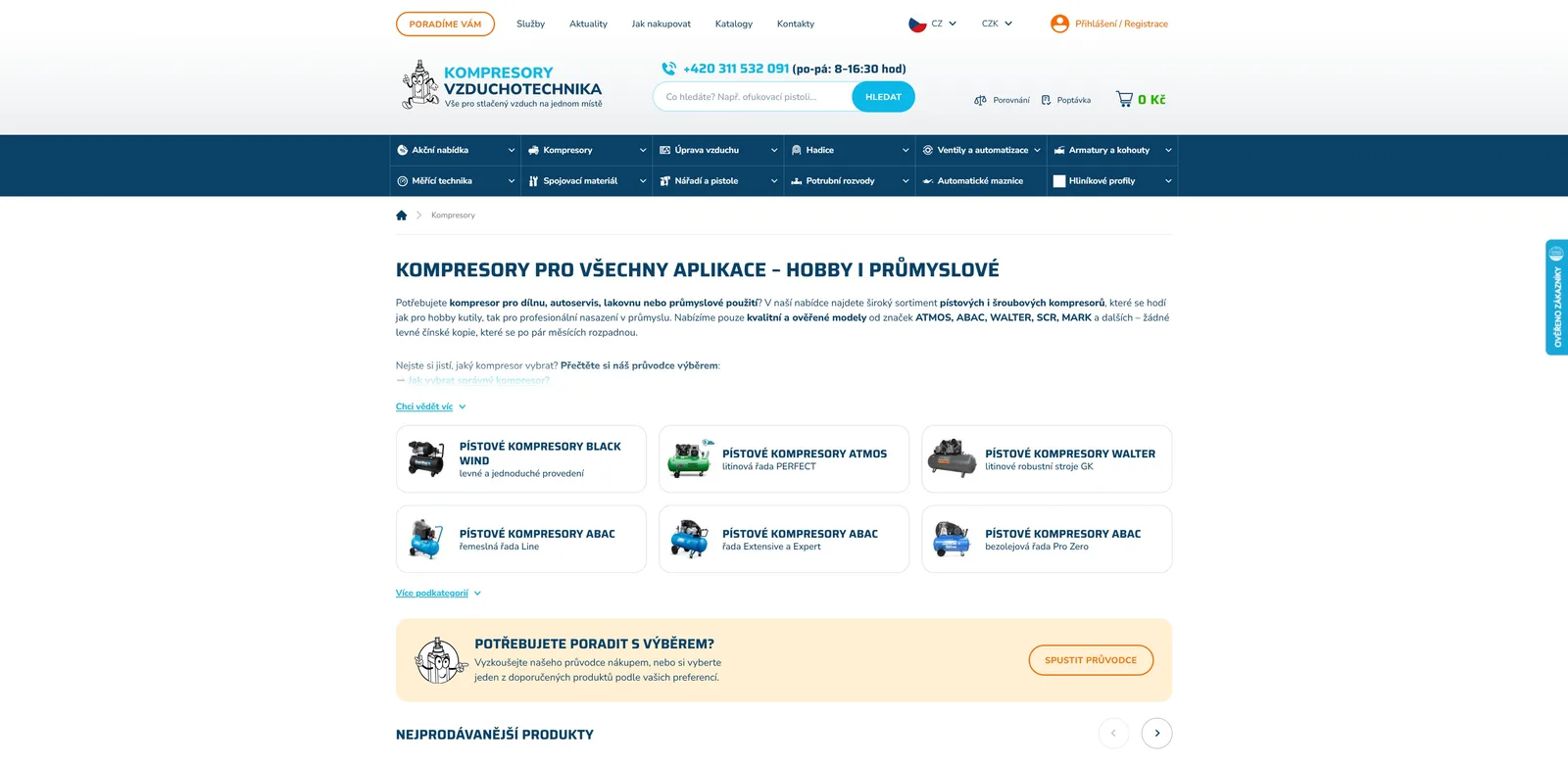
Kompresory-vzduchotechnika offers a complete range for industrial and workshop compressed air systems: compressors, pneumatic tools and accessories, FRL service units, pressure gauges, hoses and quick couplings. The technical specialists at Kompresory-vzduchotechnika will advise on the correct sizing of the whole network, the choice of FRL unit and the setting of the working pressure. The services include system design, installation, inspections and energy audits. Take a look at the range in the online shop and contact the expert advisory service directly at kompresory-vzduchotechnika.cz.
Key findings
The correct working pressure of around 6.3 bar, stabilised by an FRL service unit directly at the tool, is the basic condition of the performance, service life and safety of pneumatic tools. If the pressure drops by 0.5 bar, the working time is extended by up to 60 %.
| Point | Details |
|---|---|
| Optimum working pressure | Pneumatic tools work correctly at the recommended dynamic pressure typical for the tool. |
| Impact of a pressure drop | A pressure drop reduces performance and extends the working time, which affects efficiency. |
| Energy saving | Needlessly raising the pressure increases the energy consumption of the compressor. |
| FRL service unit | An FRL installed at the tool stabilises the pressure, filters the air and protects the internal components by lubrication. |
| Kompresory-vzduchotechnika | Offers a complete range, expert advice and the design of pressure systems for industry and workshops. |
Frequently asked questions
What pressure is correct for pneumatic tools?
Most pneumatic tools work at a dynamic pressure of around 6.3 bar. Always check the specific value in the technical documentation of the particular tool.
What causes pressure fluctuation in the system?
Pressure fluctuation is caused by pressure losses in the pipework, worn couplings, clogged filters or an undersized compressor. Measuring directly at the tool will reveal the source of the problem.
Why install the FRL unit directly at the tool?
An FRL unit at the point of use regulates the pressure to the exact value, removes moisture and contaminants and adds lubricant. Without it the tool works with poor-quality air and wears out faster.
Is high pressure dangerous for the operator?
Pressure above the recommended value raises the noise of the tool to a level harmful to hearing and increases the risk of hose or coupling failure. Correct pressure regulation protects both the tool and the operator.
Recommended
- How variable pressure affects the efficiency of pneumatic systems - Kompresory-Vzduchotechnika.cz
- Stepless pressure regulation: precise control in pneumatics - Kompresory-Vzduchotechnika.cz
- Air pressure measurement options: a guide for technicians - Kompresory-Vzduchotechnika.cz
- Air pressure regulators for compressors