

Summary:
- Modular pneumatics in industry refers to interconnected FRL assemblies that can be easily expanded or repaired. In motorsport, it refers to inserts or tubeless systems that replace conventional tyres and reduce the risk of a puncture. Both approaches allow replacement of only the faulty segment instead of the entire assembly, saving time and costs.
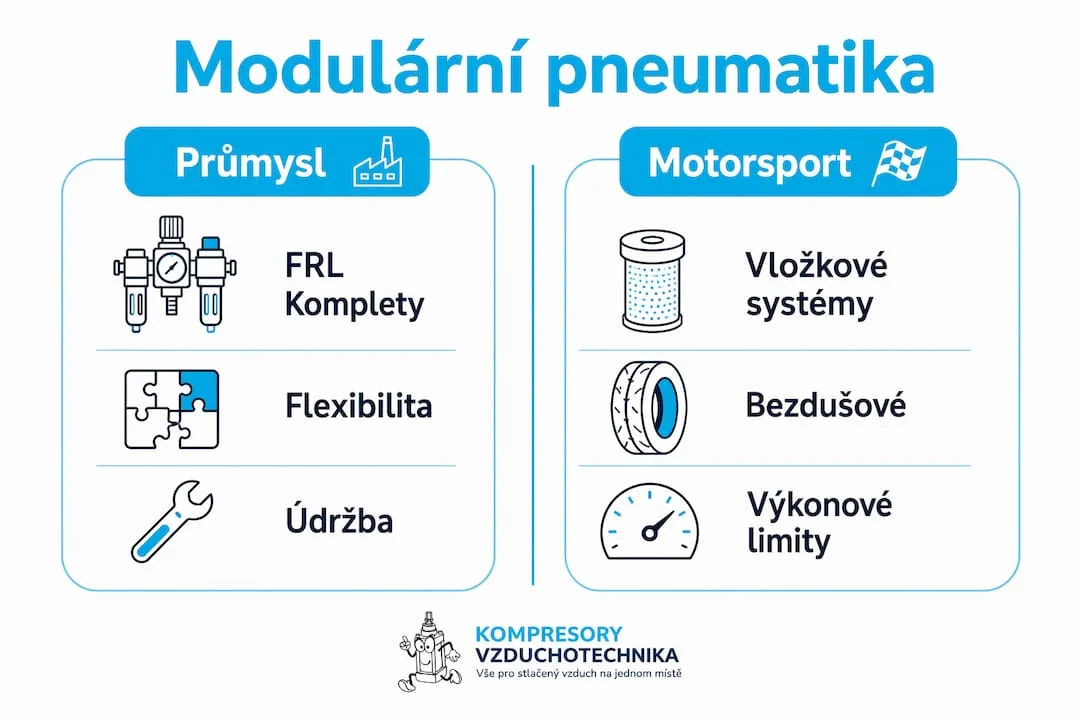
Modular pneumatics refers to two different concepts. In industry, it is a configurable FRL system (filter, regulator, automatic lubricator) for compressed air treatment, where individual modules are interconnected without affecting the overall infrastructure. In motorsport and off-road, the same term refers to modular inserts or tubeless solutions that replace the conventional inner tube. The Mr. Wolf Mousse Balls system, for example, works with 24–30 segments for the rear tyre, with the number of segments directly affecting ride stiffness. Both approaches share the same logic: instead of replacing the whole unit, only the faulty part needs to be replaced.
- Industrial FRL system: filter, regulator, automatic lubricator connected into a modular assembly; pressure switches, soft-start valves or additional filters can be added.
- Motorsport inserts: segmented mousse or balloon inserts (24–30 segments for the rear tyre) replace the inner tube and eliminate the risk of a puncture.
- Shared principle: modularity allows servicing or modification without replacing the entire assembly.
Contents
- How exactly does a modular FRL system work and what does it consist of?
- Modular inserts in motorsport: how do they work and what do the numbers tell us?
- What are the real advantages and where are the limits?
- How to choose the right modular solution?
- What does maintenance look like and what affects operating costs?
- Where to get a modular solution in the Czech Republic?
- When to choose a modular solution and when not to?
- Key findings
- Modular solutions in practice: what technicians overlook
- Kompresory-vzduchotechnika will help you with the selection
- Recommended resources and further reading
- Frequently asked questions
How exactly does a modular FRL system work and what does it consist of?
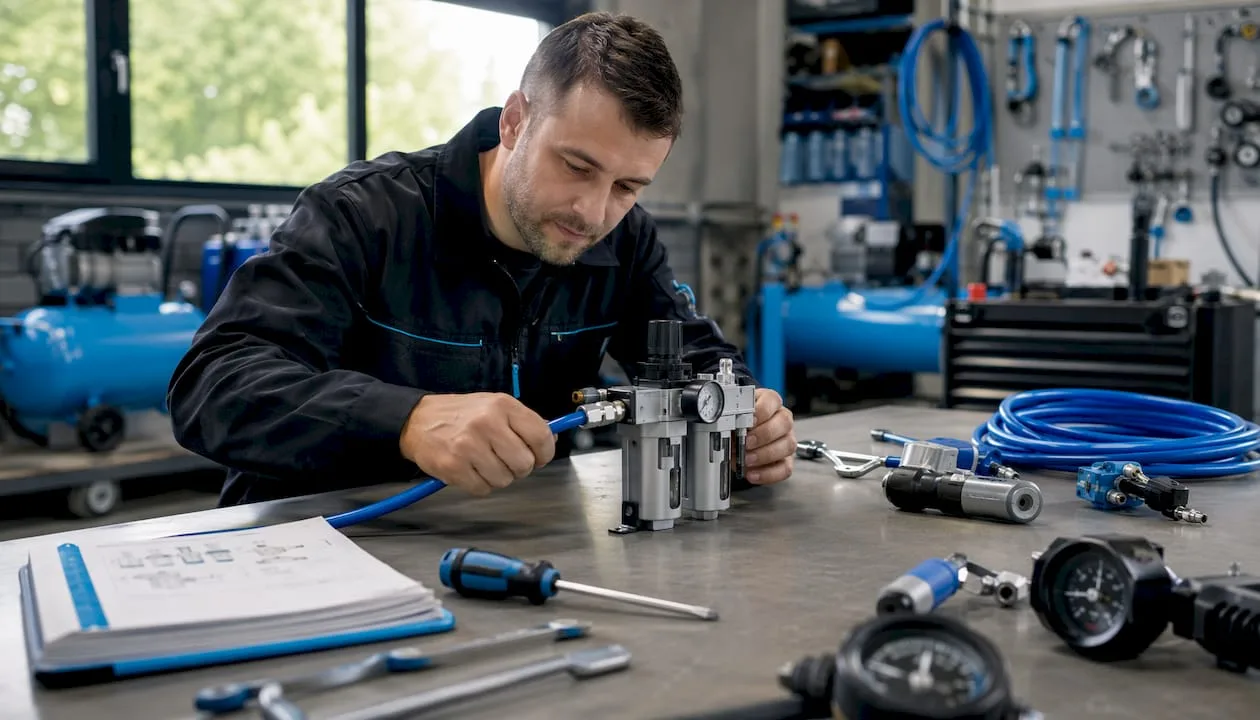
A modular FRL assembly consists of three basic modules. The filter removes moisture, oil, and solid impurities from the compressed air. The regulator maintains a constant working pressure regardless of fluctuations in the network. The automatic lubricator dispenses oil into the air stream for pneumatic tools and actuators that require lubrication.
The modules are connected via a common interface, so-called push-together connectors or distribution modules. This method of connection eliminates unnecessary threaded joints, which would otherwise increase pressure losses. A properly designed modular assembly therefore shows a lower overall pressure loss than three separate units connected in series. In addition, a common distribution module reduces the number of seals, and thus the number of potential leak points.
- Filter: separation of condensate and solid particles, element replacement without disassembling the piping.
- Regulator: working pressure setting, optionally with a pressure gauge or digital display.
- Automatic lubricator: mist or drop lubrication; can be omitted for applications with an oil-free requirement.
- Expansion modules: pressure switches, soft-start valves, flow meters, additional filters.
Professional tip: Always choose a modular interface when you are planning to expand the line or operate multiple zones with different pressure requirements. A standalone unit is cheaper to purchase, but every configuration change requires replacing the entire block.
For more on integrating FRL into production lines, see the overview of pneumatic automation in industry.
Modular inserts in motorsport: how do they work and what do the numbers say?
Tubeless and insert systems replace the classic inner tube by having the tire bead seal directly on a special rim, or by filling the internal space with a solid insert. The result is the elimination of the classic puncture: when the tire is damaged, the vehicle does not immediately lose pressure and the driver maintains control.
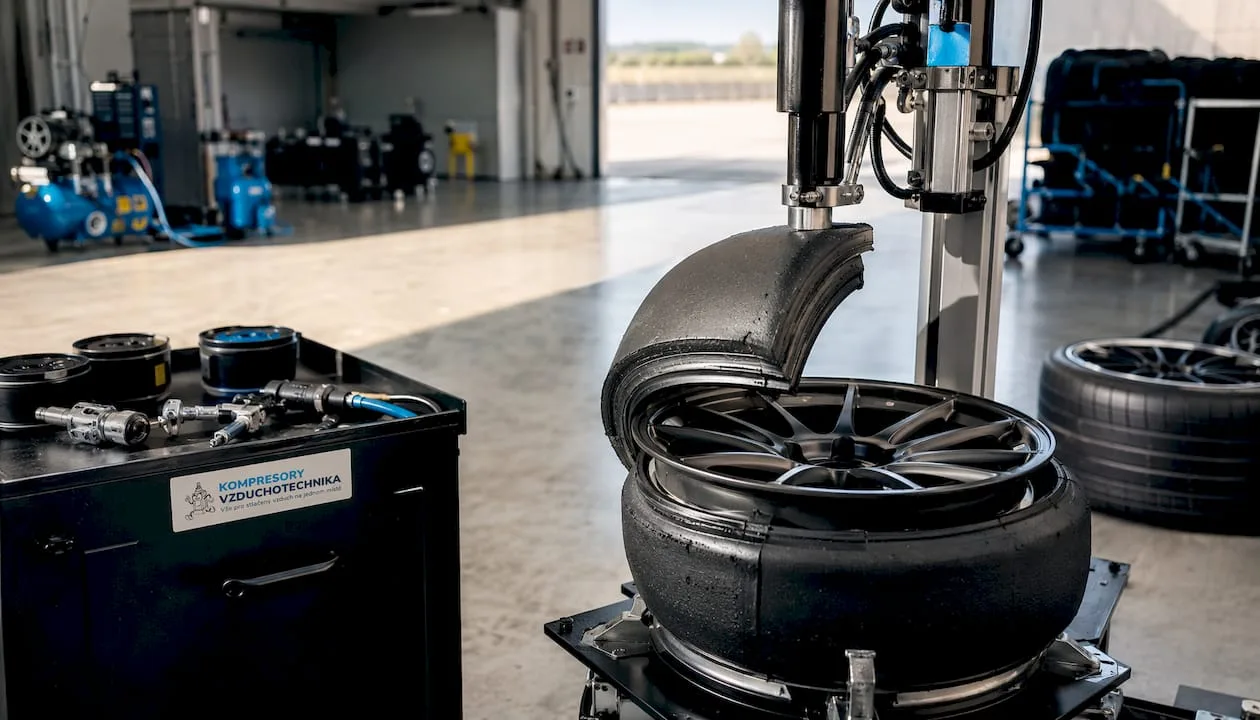
Systems such as Mr. Wolf Mousse Balls work on the principle of balloon segments. A standard package contains a number of segments for the rear tire; by adding or removing segments, the rider tunes the stiffness according to the track surface. Fewer segments mean softer behavior suitable for mud, while more segments increase stiffness for hard terrain.
| Parameter | Typical value |
|---|---|
| Number of segments, rear tire | 24–30 segments |
| Mounting type | Special rim or tubeless rim |
| Main advantage | Puncture elimination, adjustable stiffness |
Key technical insight: Damaged inserts cannot be safely reused. Every time the tire is replaced, the condition of all segments must be checked. An overlooked damaged segment is the most common cause of system failure in the field.
Installation requires mounting paste on the rim bead seat. Dry installation significantly increases the risk of a slow leak at the bead seat and is one of the most common mistakes when installing tubeless systems.
What are the actual advantages and where are the limits?
Modular solutions bring specific operational advantages, but also have real limitations that should be known before purchase.
Advantages:
- Flexible configuration without replacing the entire assembly.
- Lower pressure losses thanks to optimized internal flow and fewer threaded connections.
- Shorter downtime: a faulty module is replaced in minutes, not hours.
- Space savings compared to three separate units in series.
- For motorsport inserts: puncture elimination and adjustable stiffness.
Disadvantages:
- Higher initial investment compared to a standalone unit.
- Servicing requires knowledge of the specific system; incorrect installation negates the benefits.
- Stocks of spare modules increase tied-up capital.
Tubeless and modular insert solutions increase resistance to failure, but in the most high-performance racing applications they still cannot fully replace classic pneumatic tyres. The limited ability to cooperate with the chassis at the edge of handling remains an engineering-unresolved compromise.
An overview of the advantages of pneumatic systems in industrial operation is discussed in the article on the efficiency of pneumatic systems.
How to choose the right modular solution?
The choice depends on specific operating parameters. Go through this checklist before contacting a supplier.
- Determine the required flow rate (l/min or m³/h) and working pressure (bar).
- Calculate the number of zones with different pressure requirements.
- Estimate the service frequency and technician availability.
- Verify the line expansion plan over a horizon of 2–3 years.
- Find out the availability of replacement modules and parts from a supplier in the Czech Republic.
Questions for the supplier:
- Are the modules compatible with other manufacturers, or is it a closed system?
- How long does it take to replace a single module during operation?
- What is the warranty period and service conditions in the Czech Republic?
Additionally for motorsport:
- Compatibility of the insert with the rim diameter and width.
- Recommended number of segments for a specific type of track.
- Availability of mounting paste and service tools.
Professional tip: Calculate the total cost of ownership (TCO) as the sum of the acquisition price, annual service costs, and estimated downtime costs. For applications with more than two service interventions per year, a modular FRL unit is typically cheaper within three years of operation.
What does maintenance look like and what affects operating costs?
Modular FRL systems require regular replacement of filter cartridges, checking the oil level in the automatic lubricator, and calibration of the regulator. The frequency depends on the quality of the inlet air and the intensity of operation. The key advantage over a single unit: in the event of a regulator failure, it is sufficient to replace only the regulator module, not the entire assembly.
Main cost factors:
- Purchase price of the assembly and individual modules.
- Price of filter cartridges and oil for the automatic lubricator.
- Cost of service intervention and technician travel within the Czech Republic.
- Losses from downtime due to unplanned failure.
For motorsport inserts, different logic applies. Segments are inspected at every tire change; damaged pieces are disposed of. Regular inspection extends the system's service life and prevents failure in the field.
Practical recommendation: Keep in stock at least one spare module of each type in operation. Replacing a module on site takes minutes; waiting for delivery of a spare part can mean hours or days of downtime.
Where to purchase a modular solution in the Czech Republic?
Industrial modular FRL assemblies are available in the Czech Republic through specialized e-shops and technical wholesalers. Kompresory-vzduchotechnika offers compressed air treatment units including expert consultation, assembly design, and service support.
- Industrial FRL: check the manufacturer's catalog, the technical data sheet with flow characteristics, and the availability of spare modules in the Czech Republic.
- Motorsport inserts: enduro and motorcycle equipment dealers; verify compatibility with the rim before ordering.
- Service and installation: Kompresory-vzduchotechnika provides turnkey design, installation, inspections, and nonstop service for compressor and pneumatic systems in the Czech Republic.
When purchasing, always request the technical datasheet with flow characteristics, pressure range and connection dimensions. Compatibility of modules from different manufacturers is not guaranteed.
When to choose a modular solution and when not to?
A modular FRL makes sense where operation involves multiple zones with different pressure requirements, where service frequency exceeds twice a year, or where line expansion is planned. A standalone unit is more suitable for single-zone applications with low flow and minimal service requirements.
- Industry, modular FRL: multiple zones, high service frequency, expansion plan.
- Industry, standalone unit: simple application, low flow, limited budget.
- Motorsport, modular inserts: hobby enduro, off-road, trail racing.
- Motorsport, classic pneumatics: extreme racing use with the highest demands on handling characteristics.
Compare expected service intervals and the price of spare parts before making a final decision.
Key takeaways
Modular pneumatics, in its two main meanings, offers flexibility and lower TCO in intensive operation, but requires higher initial investment and a correctly designed configuration.
| Point | Details |
|---|---|
| Two main meanings | FRL systems in industry and segmented inserts in motorsport are distinct concepts sharing a common modularity logic. |
| Number of insert segments | A standard package for a rear tyre contains 24–30 segments; the number of segments determines stiffness. |
| TCO vs. initial cost | A modular FRL has a higher purchase price, but with more service interventions per year it reduces overall costs by allowing replacement of only the faulty module. |
| Performance limits | Tubeless and insert-based systems do not replace conventional tyres in racing applications with extreme handling requirements. |
| Kompresory-vzduchotechnika | Offers design, supply and service of modular FRL assemblies in the Czech Republic, including expert consultation. |
Modular solutions in practice: what technicians overlook
The most common mistake when specifying a modular FRL is not in the selection of the modules themselves, but in underestimated flow rate. The designer sizes the assembly for the current need, and a year later, when another machine is added, the system is no longer sufficient. Modular architecture solves this problem more easily than a standalone unit, but only if expansion is planned for from the start and a sufficiently sized interface is chosen.
With motorsport inserts, technicians most often skip checking the segments when replacing the tyre casing. A damaged bladder looks harmless, but out in the field it causes the whole system to fail. Equally underestimated is the mounting paste: dry-fitting the bead onto the rim is a direct route to a slow leak.
The recommendation is simple: before finalising the specification, consult the assembly with a specialist who knows the specific operating conditions.
Kompresory-vzduchotechnika will help you with the selection
A correctly designed modular assembly saves both time and money, but only if it matches the actual operating parameters. Kompresory-vzduchotechnika offers turnkey FRL assembly design, module supply, installation, inspections and nonstop service in the Czech Republic.
The technical department will assess your existing compressed air distribution, recommend a suitable configuration and ensure module compatibility. The entire range of pneumatics and hydraulics is available online with the option of expert consultation. Send us the technical parameters of your operation and get a specific recommendation with no obligation.
Recommended sources and further reading
- Technical data sheets for FRL assembly manufacturers: request them directly from the supplier; they contain flow characteristics, pressure range and connection dimensions.
- ETRTO and UNECE R30 standards set out the technical requirements for tubeless systems; available on the websites of the relevant standardisation bodies.
- Pneumatic system installation step by step on Kompresory-vzduchotechnika: a practical guide for installing FRL units and piping.
- How pneumatics works in industry: a more in-depth technical explanation for readers who want to understand the wider context.
- Mousse insert manufacturers (Mr. Wolf, Tannus): their product pages contain compatibility tables with tyre and rim dimensions.
Frequently asked questions
What is modular pneumatics in industry?
Modular pneumatics in industry refers to a configurable FRL assembly (filter, regulator, automatic lubricator), where individual modules are connected via a common interface and can be replaced or expanded without affecting the entire installation.
How many segments do modular inserts for rear tyres have?
Standard packaging of Mousse Balls type modular inserts contains 24–30 segments for rear tyres; the number of segments directly affects stiffness and handling.
Are tubeless inserts suitable for racing use?
They are suitable for hobby enduro and off-road use, but in racing applications with extreme demands on handling, they cannot fully replace classic tyres due to limited interaction with the chassis at the limit of performance.
How to reduce operating costs of a modular FRL system?
Keep a stock of spare modules and adhere to service intervals for replacing filter elements. On-site replacement of a faulty module eliminates downtime costs, which are usually higher than the price of the module itself.
Where to purchase modular FRL assemblies in the Czech Republic?
Kompresory-vzduchotechnika offers modular compressed air treatment units, including assembly design, installation, and service support in the Czech Republic.
Recommended
- How pneumatics works: a complete guide for industry 2026
- What is pneumatic logic: a guide for industry - Kompresory-Vzduchotechnika.cz
- The Role of Automation in Pneumatics in Manufacturing Processes - Kompresory-Vzduchotechnika.cz
- What is pneumatic automation: a guide for industry - Kompresory-Vzduchotechnika.cz