
Kompresory na stlačený vzduch

Kompresor se vybírá podle dvou věcí: kolik vzduchu spotřebuje to, co k němu připojíte, a jak dlouho v kuse poběží. Na hustění kol stačí malý stroj, bruska nebo lakovna potřebují násobek. Tabulka níž je seřazená od nejmenších strojů po ty, které drží celou výrobu.
Která řada je pro vás
Řady jsou seřazené od nejmenších strojů po největší. U každé je rozsah sání a výtlaku v litrech za minutu, nejvyšší tlak a napájení.
| Řady kompresorů podle sání, výtlaku, tlaku a napájení | |||||
|---|---|---|---|---|---|
| Řada | Pro koho | Sání | Výtlak | Tlak | Napájení |
| Black Wind | domácnost a občasné hustění | 160–356 l/min | 84–257 l/min | 8–10 bar | 230 V |
| ABAC Line | řemeslník, menší dílna | 160–355 l/min | 80–277 l/min | 8–10 bar | 230 V |
| ABAC Expert Zero | tam, kde vzduch nesmí obsahovat olej | 255–486 l/min | 165–316 l/min | 10 bar | 230 / 400 V |
| ABAC Super Silent | dílna, kde se mluví a telefonuje | 140–230 l/min | 45–94 l/min | 8–9 bar | 230 V |
| ABAC Pro Line | denní provoz v dílně nebo servisu | 178–2 420 l/min | 125–1 864 l/min | 10–15 bar | 230 / 400 V |
| ABAC Silent | provoz u pracoviště bez samostatné kompresorovny | 50–1 070 l/min | 27–864 l/min | 8–11 bar | 230 / 400 V |
| ATMOS Perfect | trvalé zatížení, litinový agregát | 420–1 500 l/min | 323–1 170 l/min | 10–12,5 bar | 230 / 400 V |
| WALTER | dílna i průmysl, litinový agregát | 420–1 400 l/min | 340–1 100 l/min | 10–15 bar | 230 / 400 V |
| ABAC Tech | průmysl, vícesměnný provoz | 204–1 716 l/min | 126–1 080 l/min | 10–30 bar | 230 / 400 V |
| Šroubové | nepřetržitý odběr, provozy a výroba | — | 200–66 200 l/min | 7–20 bar | 230 / 400 V |
| Spalovací | stavba a místa bez elektřiny | 275–1 038 l/min | — | 10–14 bar | benzín / nafta |
| Dentální | ordinace a laboratoře | 240–480 l/min | 125–240 l/min | 8 bar | 230 V |
Sání je vzduch, který stroj nasaje, výtlak to, co skutečně dodá do nářadí. U našich pístových strojů je výtlak zhruba o čtvrtinu nižší než sání. Šroubové kompresory výrobce udává jen výtlakem, spalovací jen sáním.
#showmore#
Vyberte podle parametru
Ke každé vlastnosti máme samostatnou stránku se všemi stroji, které ji mají. Počty v tabulkách jsou z naší nabídky.
Podle objemu nádoby
Nádoba (vzdušník) vyrovnává odběr — nářadí bere vzduch z ní a kompresor ho dopouští. Vzduch v ní zároveň vychladne a vysráží se z něj voda, kterou odvádí odpouštěč kondenzátu.
| Kompresory podle objemu tlakové nádoby | |||
|---|---|---|---|
| Nádoba | Strojů | Typický výtlak | Na 230 V |
| Kompresory 6 l | 8 | 84 l/min | 8 |
| Kompresory 24 l | 8 | 150 l/min | 7 |
| Kompresory 50 l | 36 | 208 l/min | 25 |
| Kompresory 90 l | 39 | 255 l/min | 14 |
| Kompresory 100 l | 10 | 340 l/min | 3 |
| Kompresory 150 l | 34 | 283 l/min | 14 |
| Kompresory 200 l | 43 | 350 l/min | 7 |
| Kompresory 270 l | 108 | 637 l/min | 6 |
| Kompresory 300 l | 10 | 950 l/min | 0 |
| Kompresory 500 l | 97 | 1 016 l/min | 0 |
| Kompresory bez tlakové nádoby | 301 | 6 200 l/min | 2 |
Nádoby našich strojů mají od 2,5 do 900 litrů. Do 50 litrů jsou stroje převážně na zásuvku 230 V, od 200 litrů výš převažují třífázové stroje a přibývá šroubových kompresorů. Větší nádoba se vyplatí při nárazovém odběru — ofukování, stříkání, pískování. Ke strojům bez nádoby patří samostatný vzdušník z kategorie Tlakové nádoby a vzdušníky.
Podle konstrukce a výbavy
| Kompresory podle konstrukce a výbavy | ||
|---|---|---|
| Co hledáte | Strojů | K čemu |
| Pístové kompresory | 360 | přerušovaný provoz v dílně a servisu |
| Šroubové kompresory | 343 | nepřetržitý odběr vzduchu |
| Spirálové kompresory | 21 | spirály místo pístů, všechny bez oleje |
| Jednopístové kompresory | 23 | malé stroje na 230 V do domácí dílny |
| Dvoupístové kompresory | 296 | agregát se dvěma válci |
| Třípístové kompresory | 29 | olejové třívalce s řemenem na 400 V |
| Čtyřpístové kompresory | 12 | olejové i bezolejové čtyřválce |
| Dvoustupňové kompresory | 145 | vyšší tlak, typicky 11 bar, i 15 až 30 bar |
| Bezolejové kompresory | 121 | vzduch bez oleje pro potraviny a ordinace |
| Odhlučněné kompresory | 422 | stroj v protihlukové skříni |
| Kompresory se sušičkou | 113 | suchý vzduch z jednoho stroje |
| Šroubové s frekvenčním měničem | 207 | výkon se přizpůsobí odběru |
| Kompresory se stojatou nádobou | 34 | menší zastavěná plocha |
| Olejové kompresory | 624 | nejběžnější stavba, olej maže a chladí |
| Mobilní kompresory | 183 | na kolech, přesun po dílně i stavbě |
Podle napájení, tlaku a použití
| Kompresory podle napájení, tlaku a použití | ||
|---|---|---|
| Co hledáte | Strojů | K čemu |
| Kompresory na 230 V | 105 | běžná zásuvka, bez třífázové přípojky |
| Kompresory na 400 V | 610 | třífázová přípojka, každý stroj nad 3 kW |
| Rozběh hvězda–trojúhelník | 26 | menší proudový náraz při startu, od 4 kW |
| Kompresory s benzínovým motorem | 18 | práce bez elektřiny |
| Dieselové kompresory | 4 | nafta na dlouhé směny bez elektřiny |
| Kompresory 8 bar | 180 | stačí běžnému nářadí, hlavně šroubové |
| Kompresory 10 bar | 448 | nejčastější tlak v nabídce |
| Kompresory 11 bar | 95 | rezerva nad běžných 10 bar |
| Kompresory 15 bar | 11 | vysokotlaké dvoustupňové stroje |
| Kompresory 20 bar | 12 | dvoustupňové pístové a jeden šroubový |
| Kompresory 30 bar | 6 | nejvyšší tlak v nabídce, na rámu bez nádoby |
| Hobby kompresory | 10 | občasná práce v garáži, 230 V |
| Poloprofesionální kompresory | 25 | domácí dílna a občasná práce |
| Profesionální kompresory | 660 | denní provoz v dílně a výrobě |
| Průmyslové pístové kompresory | 72 | častý a dlouhý chod, pomalé otáčky |
Podle čeho vybírat
Co rozhoduje o správném stroji — od spotřeby nářadí po hlučnost. Kdo s kompresory začíná, najde základy v článku Co je kompresor.
Kolik vzduchu spotřebuje nářadí
Spotřeba je převzatá z nářadí, které sami prodáváme. U každého druhu je rozsah od nejúspornějšího po nejnáročnější kus a typická hodnota. Rázový utahovák na kola nebo úhlová bruska vezmou víc, než se obvykle čeká.
| Spotřeba vzduchu u pneumatického nářadí z naší nabídky | |||
|---|---|---|---|
| Nářadí | Spotřeba | Typicky | Změřeno z |
| Příklepové utahováky | 119–453 l/min | 144 l/min | 12 kusů |
| Ráčnové utahováky | 69,4–130 l/min | 113 l/min | 9 kusů |
| Stopkové brusky | 29–490 l/min | 169 l/min | 15 kusů |
| Úhlové brusky | 113–490 l/min | 255 l/min | 10 kusů |
| Excentrické brusky | 88–298 l/min | 109 l/min | 12 kusů |
| Prostřihovače plechu | 85–184 l/min | 113 l/min | 5 kusů |
| Vrtačky | 112–184 l/min | 113 l/min | 8 kusů |
| Šroubováky | 90–254 l/min | 113 l/min | 17 kusů |
| Sekací kladiva | 85–424 l/min | 167 l/min | 10 kusů |
Jak to porovnat: vyberte stroj, jehož výtlak je vyšší než spotřeba nářadí, a nechte si rezervu — kompresor nemá běžet na doraz bez přestávky. Když poběží víc nástrojů naráz, jejich spotřeby se sčítají.
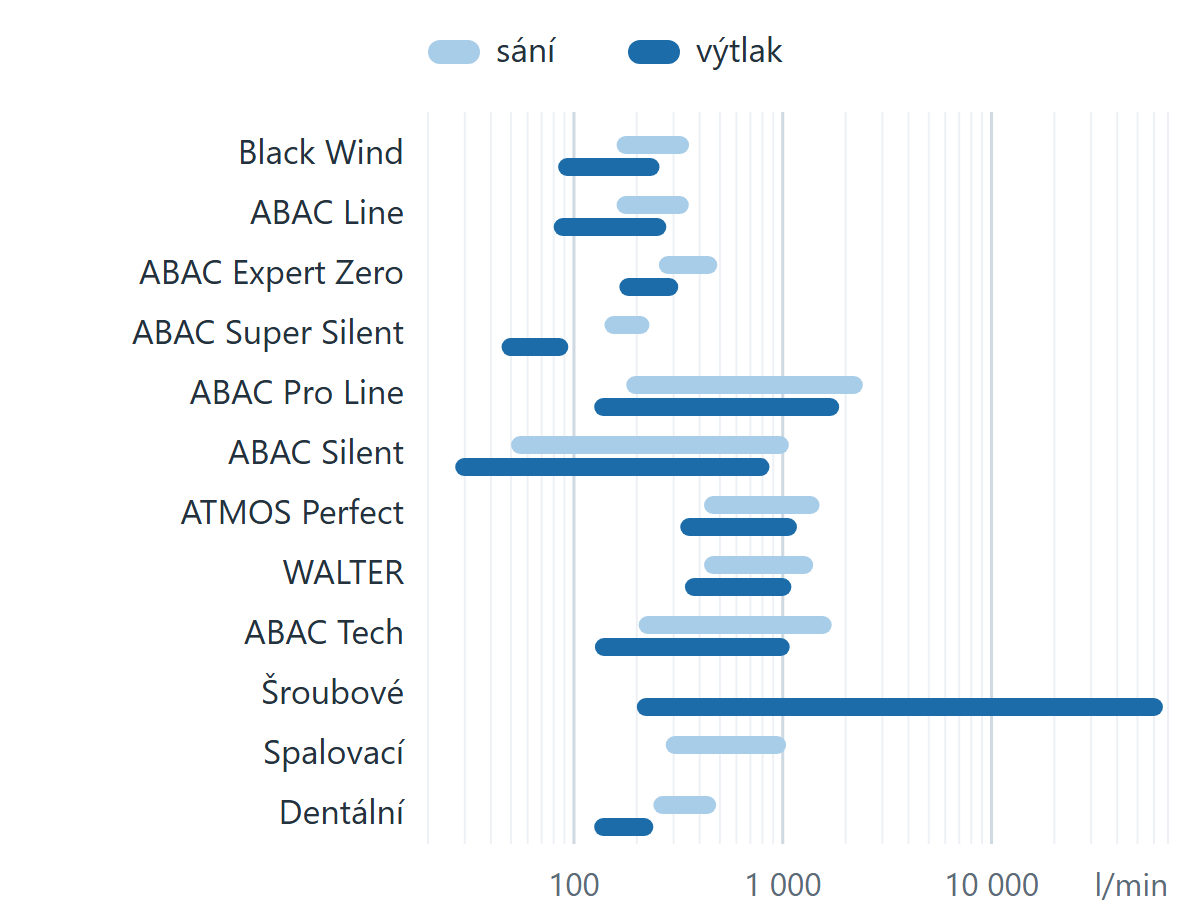
Graf ukazuje totéž pro kompresory: světlý pruh je sání, tmavý výtlak. Osa roste po řádech, aby se na ni vešel malý stroj na hustění i šroubový kompresor pro celou výrobu.
Na lakování nestačí jen dost vzduchu — musí být čistý, suchý a se stálým tlakem. Co k tomu patří, popisuje článek Lakování s kompresorem: co je k tomu potřeba.
Pístový, nebo šroubový
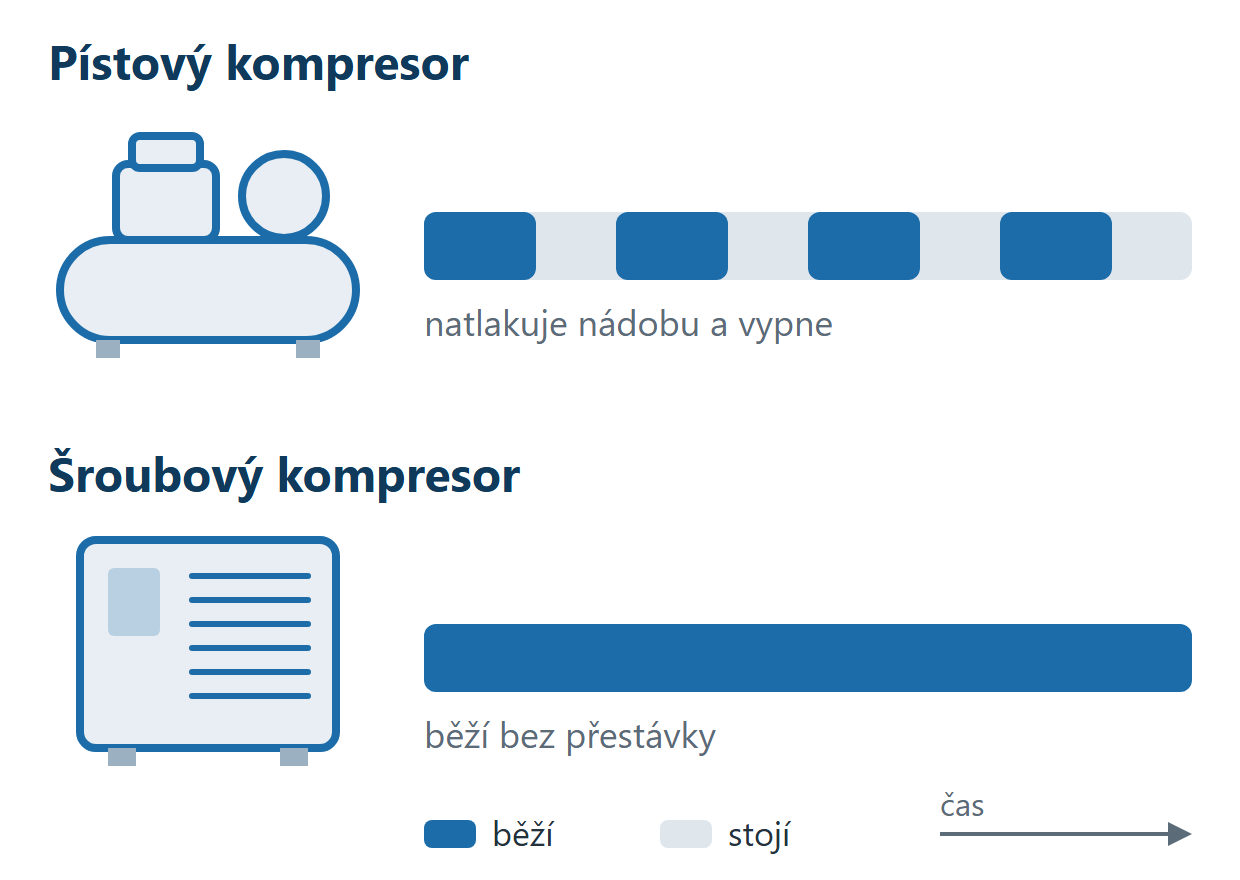
Rozhoduje doba chodu, ne velikost dílny. Pístový kompresor je stavěný na přerušovaný provoz — natlakuje nádobu a vypne. Kdyby měl běžet pořád, přehřívá se a zkracuje si život.
Šroubový je naopak stavěný na to, aby běžel bez přestávky. Vyplatí se tam, kde se vzduch odebírá trvale — v lakovně, u strojů ve výrobě, v provozu na směny. Jak ho provozovat úsporně, popisuje článek Efektivní provoz šroubových kompresorů.
Jak se typy liší v číslech, ukazuje srovnání celé naší nabídky. Pomlčka znamená, že vlastnost se u daného typu neuvádí.
| Typy kompresorů v číslech — z naší nabídky | ||||
|---|---|---|---|---|
| Pístový | Šroubový | Spirálový | Spalovací | |
| Strojů v nabídce | 360 | 343 | 21 | 22 |
| Typický výtlak | 350 l/min | 4 100 l/min | 1 200 l/min | sání 524 l/min |
| Rozsah výtlaku | 27–1 864 l/min | 272–66 200 l/min | 200–3 520 l/min | sání 275–1 038 l/min |
| Tlak | 8–30 bar | 7–20 bar | 7–10 bar | 10–14 bar |
| Bez oleje | 68 | 32 | 21 | 0 |
| Odhlučněné | 78 | 323 | 21 | 0 |
| Se sušičkou | 32 | 81 | 0 | 0 |
| S frekvenčním měničem | — | 207 | 0 | — |
| Na 230 V | 104 | 1 | 0 | — |
Kolik vzduchu dá jeden kilowatt
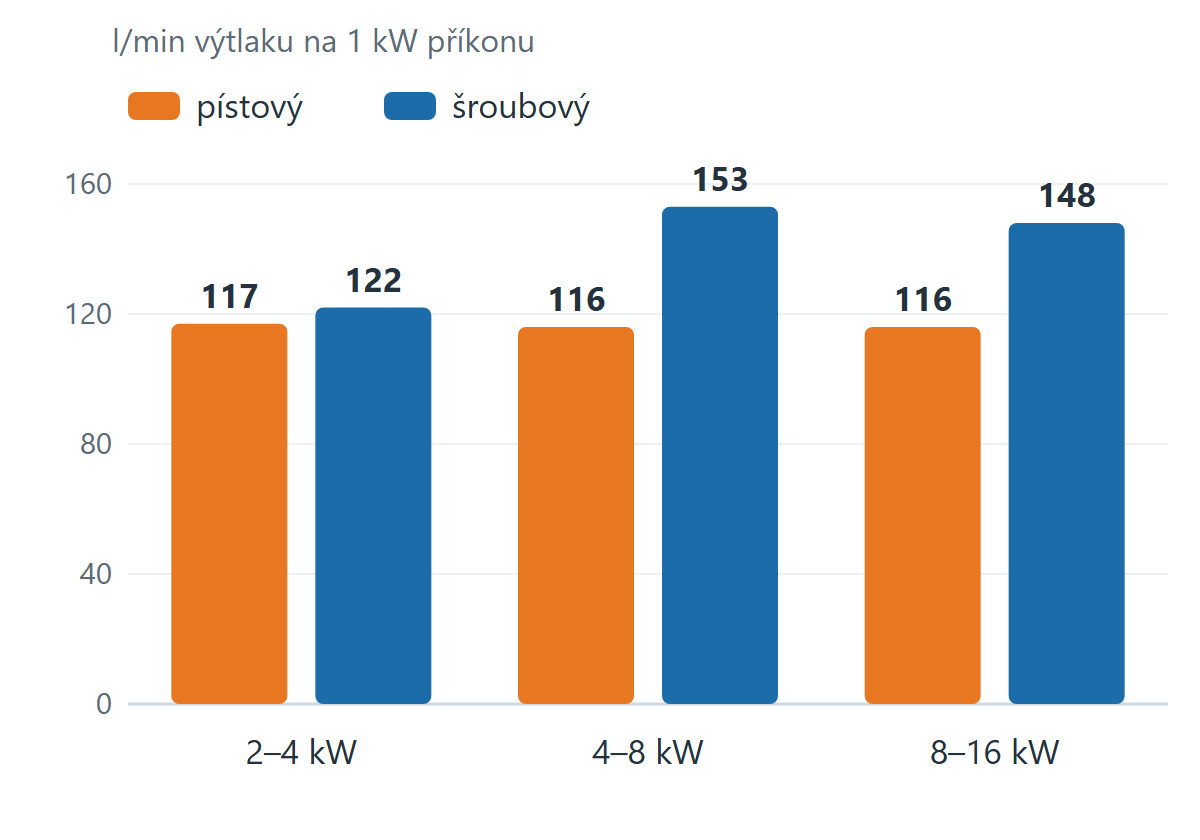
Šroubový kompresor má pověst úspornějšího stroje. Naše data to potvrzují, ale s výhradou velikosti: do 4 kW dá pístový i šroubový z jednoho kilowattu skoro stejně vzduchu — 117 a 122 l/min. Od 8 kW výš dodá šroubový zhruba o čtvrtinu víc, 148 proti 116 l/min.
Porovnávali jsme jen stroje stejného příkonu, jinak by výsledek zkreslilo, že šroubové kompresory jsou v průměru mnohem větší. Jak spotřebu elektřiny snížit, popisuje článek Spotřeba energie kompresoru.
Přímý pohon, nebo klínový řemen
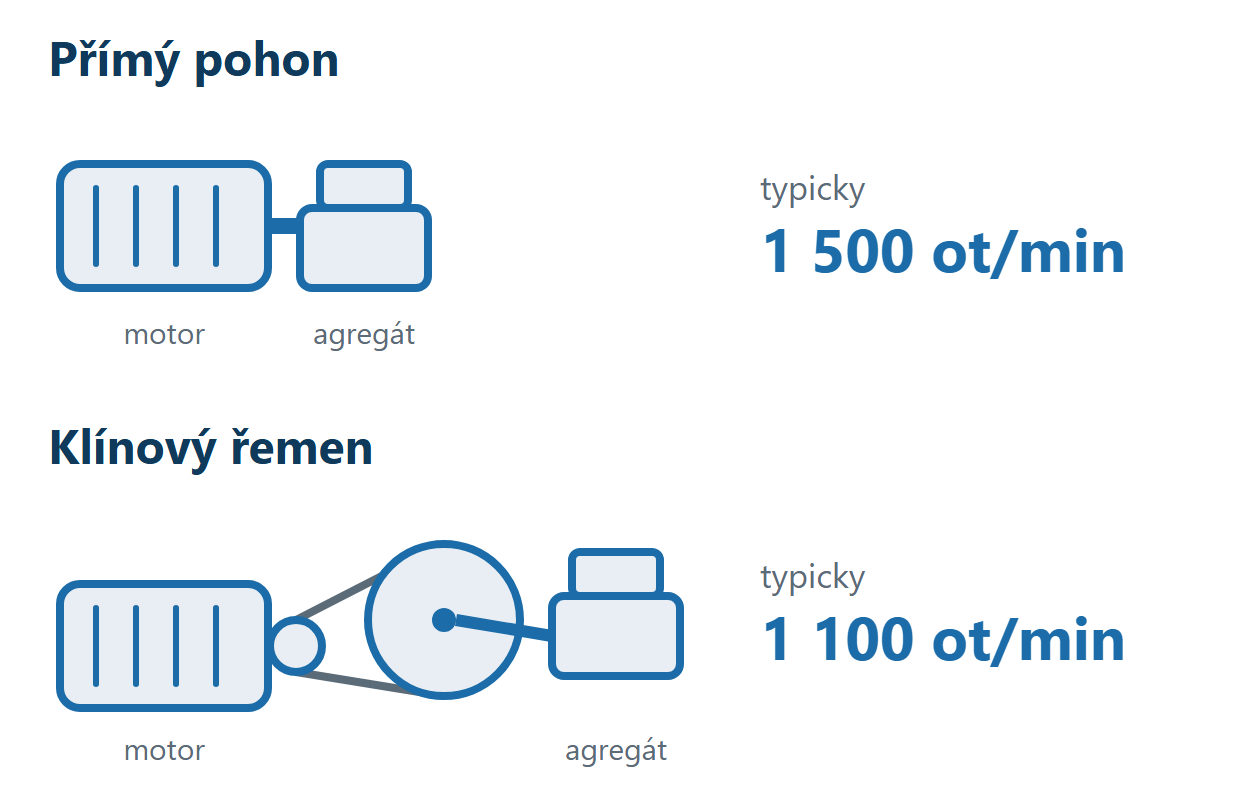
U pístových kompresorů rozhoduje i to, jak motor pohání agregát. Při přímém pohonu sedí agregát přímo na hřídeli motoru a točí se rychle — typicky 1 500 otáček za minutu. Klínový řemen otáčky převede dolů, typicky na 1 100 za minutu, a pomaleji běžící agregát se méně zahřívá.
Při stejném příkonu 1,5 až 2,2 kW váží naše stroje s přímým pohonem typicky 45 kg a dodají 174 l/min. Řemenové jsou těžší, kolem 80 kg, ale dodají kolem 255 l/min. V nabídce máme 98 pístových strojů s přímým pohonem a 246 s řemenem.
230 V, nebo 400 V
Malé a střední stroje běží na běžné zásuvce 230 V — v nabídce jich je zhruba sto a nejsilnější z nich má příkon 3 kW. Víc jednofázová síť neutáhne: motor by při rozběhu shazoval jistič.
Hranici neurčuje tabulka, ale co máte přivedené do dílny. S třífázovou přípojkou 400 V se otevře zbytek nabídky až po průmyslové šroubové stroje. Když jistič padá už dnes, příčiny popisuje článek Kompresor vypíná jistič.
S olejem, nebo bez oleje
S olejem
Olej maže a chladí, takže agregát vydrží víc a snese delší chod. Do vzduchu se ale dostane olejová mlha — tam, kde vadí, se odfiltruje.
Bez oleje
Vzduch je od začátku bez oleje. Hodí se do potravinářství, laboratoří a ordinací a všude, kde by olej znehodnotil výsledek. Agregát se opotřebuje dřív.
Bez oleje máme přes 100 strojů: celé řady ABAC Expert Zero, Super Silent a Dentální, bezolejové šroubové kompresory a jednotlivé modely v dalších řadách. O čištění vzduchu píše článek Jak filtrovat stlačený vzduch.
Hlučnost a odhlučnění
Má-li kompresor stát přímo u pracoviště, a ne v kompresorovně, sáhněte po odhlučněném stroji. Rozdíl je znát: u našich pístových kompresorů je hladina akustického tlaku ve 4 metrech typicky 68 dB u odhlučněných a 77 dB u ostatních. 9 decibelů vnímá ucho skoro jako poloviční hluk.
Řady ABAC Silent a Super Silent jsou odhlučněné celé, šroubové kompresory bývají odhlučněné už z výroby. Jak číst údaje o hluku na štítku, vysvětluje článek Hlučnost kompresoru a na co si dát pozor.
Co ke kompresoru patří
Kompresor vzduch jen vyrobí. Aby došel k nářadí suchý, čistý a pod správným tlakem, potřebuje doplňky.
Úprava vzduchu
Ve stlačeném vzduchu je vždy voda. Hrubou část zachytí cyklónový odlučovač vody, zbytek vlhkosti odstraní sušička stlačeného vzduchu. 113 našich kompresorů má sušičku už vestavěnou.
Olej a nečistoty zachytí filtry, tlak pro nářadí nastaví regulátor — obojí je v kategorii Filtrace, regulace a úprava vzduchu. Proč na suchém vzduchu záleží, popisuje článek Proč a jak sušit stlačený vzduch.
Rozvod a připojení
Téměř všechny naše menší stroje mají výstup na rychlospojku DN 7,2 — celkem ji má 197 kompresorů. Odpovídající spojky a vsuvky jsou v kategorii Rychlospojky ES DN 7,2.
K nim patří hadice pro stlačený vzduch a na ofukování ofukovací pistole.
Pevný rozvod pro víc pracovišť se staví z potrubních rozvodů stlačeného vzduchu. Jak ho navrhnout, popisuje článek Rozvody stlačeného vzduchu.
Údržba a náhradní díly
Kompresor vydrží roky, když se mu včas mění olej a sací filtr a hlídá se odvod kondenzátu. Správný olej najdete v kategorii Olej do kompresoru, co a kdy měnit, popisuje článek Jak a proč dělat správně údržbu kompresorů.
Díly ke strojům jsou pohromadě v kategorii Náhradní díly a příslušenství. Kompresor zapíná a vypíná tlakový spínač. Když dosluhuje celý agregát, vymění se samostatně — za kompresorovou jednotku.
Značky
Stroje v nabídce pocházejí od pěti výrobců.
- ABAC — od řemeslné řady Line po průmyslové stroje Tech, včetně bezolejových, odhlučněných a spalovacích
- ATMOS — pístové kompresory Perfect s litinovým agregátem
- WALTER — litinové pístové kompresory pro dílnu i průmysl
- Black Wind — malé kompresory na běžnou zásuvku
- SCR — šroubové a spirálové kompresory

Ventilek radí
Nejčastější chyba je malý stroj na velké nářadí.
Řeknu vám to narovinu — když pověsíte brusku na kompresor, který ji neutáhne, nedopadne špatně bruska, ale kompresor. Poběží pořád, přehřeje se a odejde dřív, než se vám zaplatí. Podívejte se do tabulky spotřeby a přidejte rezervu.
Časté dotazy
- Jak poznám, že kompresor utáhne moje nářadí?
- Porovnejte výtlak kompresoru se spotřebou nářadí v tabulce výše a nechte si rezervu. Kdo porovnává se sáním, koupí stroj o číslo menší, než potřebuje.
- Jaký je rozdíl mezi sáním a výtlakem?
- Sání je vzduch, který kompresor nasaje, výtlak to, co skutečně dodá. U našich pístových strojů je výtlak nižší o 15 až 50 %, nejčastěji zhruba o čtvrtinu.
- Jak velkou nádobu potřebuju?
- Záleží na odběru. Při nárazovém odběru, třeba při ofukování nebo stříkání, pomůže větší nádoba. Při stálém odběru rozhoduje hlavně výtlak stroje.
- Jaký tlak potřebuju?
- Většina pneumatického nářadí pracuje s tlakem kolem 6 bar. Kompresor s nejvyšším tlakem 10 bar — takových máme 448 — má proto rezervu a nemusí spínat příliš často. Vyšší tlak potřebují jen zvláštní použití.
- Stačí mi kompresor na 230 V?
- U malých a středních strojů ano — nejsilnější kompresory na běžnou zásuvku mají příkon 3 kW. Pro větší výkon je potřeba třífázová přípojka 400 V.
- Kdy se vyplatí šroubový kompresor?
- Když se vzduch odebírá trvale, ne nárazově. Pístový stroj v nepřetržitém provozu se přehřívá, šroubový je na to stavěný. Od 8 kW výš navíc dodá z jednoho kilowattu zhruba o čtvrtinu víc vzduchu.
- Přímý pohon, nebo řemen?
- Přímý pohon je lehčí a menší, řemenový stroj se točí pomaleji, snese delší chod a ze stejného motoru dodá víc vzduchu.
- Potřebuju bezolejový kompresor?
- Jen tam, kde olej ve vzduchu vadí — v potravinářství, laboratořích a ordinacích. Pro dílnu a nářadí je olejový stroj odolnější.
- Potřebuju k tomu vzdušník?
- Většina pístových strojů ho má v sobě. Samostatný vzdušník se přidává ke kompresorům bez nádoby, při kolísavém odběru nebo pro rozvod na víc pracovišť.
-
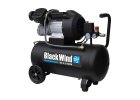
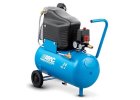
 Pístové kompresory Black Wind
-
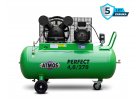
Pístové kompresory Atmos
-
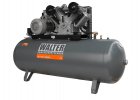
Litinové pístové kompresory WALTER
-
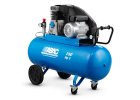
Pístové kompresory ABAC
-
Pístové kompresory ABAC
-
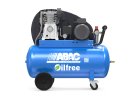
Kompresory Expert Zero
-
Pístové kompresory ABAC
-
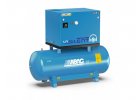
Tiché kompresory Super Silent OS
-
Kompresory INDUSTRIAL TECH
-
Pístové kompresory CLR
-
Spalovací kompresory
-
Šroubové kompresory
-
Tlakové nádoby
-
Příslušenství kompresorů
.png)


Řazení produktů
Výpis produktů

Originální olej pro pístové kompresory ATMOS řad Perfect a Perfect Line. Viskozita je zvolená přímo pro tyhle stroje, takže se nemusí dohledávat náhrada.


Litrová lahev oleje, který výrobce předepisuje přímo pro kompresory ABAC řady Line L/V a jednostupňové stroje A29 a A39. Jedno balení pokryje u většiny z nich celou výměnu.

Miniaturní kulové kohouty z poniklované mosazi. Tělo - poniklovaná mosaz, páčka - hliník, koule - chromovaná mosaz, těsnění - PTFE. Pro přípoje stlačeného vzduchu v průmyslu,...

Nejjednodušší spínač v nabídce. Přichází pevně nastavený, takže se po montáži nemusí nic dolaďovat.

Ležatý vzdušník v objemu, jaký mívají nádrže malých kompresorů. Postavený vedle kompresoru zdvojnásobí zásobu vzduchu a stroj bude spínat méně často.

Ochrana vzdušníku pro případ, že tlakový spínač nevypne. Při překročení nastaveného tlaku pustí vzduch ven a zabrání přetlakování nádoby. Šroubuje se přímo do volného výstupu v...

Sada pro upevnění expanzní nebo tlakové nádoby na stěnu: ocelový držák s pryžovými vložkami, nerezová stahovací páska s rychlouzávěrem, 2 šrouby, 4 podložky a 2 hmoždinky. Pro...

Sací filtry slouží jako ochrana před vniknutím nečistot do stroje a je třeba jej pravidelně vyměňovat. Ke kompresorům ATMOS se dodávají sací filtry jako standardní...

Sada: tichý bezolejový kompresor BO-0,75-6PM (56 dB, 15 kg, 6 l) + spirálová hadice 5 m, pneuhustič s manometrem a tři ventilky na míče, kola a matrace.

Nová řada odpouštěčů kondenzátu LD využívá pro svoji funkci systém nazývaný kapacitní odpouštění. Ve srovnání s tradičním časovým odpouštěním má tento systém několik podstatných...

Inteligentní odvaděč kondenzátu LogiDrain LD202 s průtokem kompresoru až 30 000 l/min je nejmodernější systém odpouštění kondenzátu s automatickým řízením chodu, detekcí závad a...

Ochrana vzdušníku pro případ, že tlakový spínač nevypne. Při překročení nastaveného tlaku pustí vzduch ven a zabrání přetlakování nádoby. Šroubuje se přímo do volného výstupu v...

Náhradní sací filtrační vložka pro velký kulatý sací filtr od kompresorů značky ATMOS. Tato filtrační vložka se nachází u pístových kompresorů značky ATMOS řady Bobby, Perfekt...

Dvě lahve originálního oleje ATMOS pohromadě. Pro stroje Perfect od 4 kW výš, kde na jednu výměnu jedna lahev nestačí.

Silentbloky GPD5030 pro kompresory s tlakovou nádobou. Určené především pro montáž na nástavce tlakových nádob, Zamezují přenosu vibrací a přispívají ke snížení hlučnosti a...

Náhradní sací filtrační vložka pro velký kulatý sací filtr od kompresorů značky ATMOS. Tato filtrační vložka se nachází u pístových kompresorů značky ATMOS řady Perfect o výkonu...

Nejsilnější jednostupňový stroj řady: A39B se 3 kW na 400 V, 486 l/min při 1 300 ot/min, 10 bar, vzdušník 90 l na kolečkách, 94 kg. Regulátor se dvěma manometry, rychlospojka DN...

Miniaturní kulové kohouty z poniklované mosazi. Tělo - poniklovaná mosaz, páčka - hliník, koule - chromovaná mosaz, těsnění - PTFE. Pro přípoje stlačeného vzduchu v průmyslu,...

Úspornější provedení pro vzdušníky, které už mají vlastní vývody. Šroubuje se jediným závitem a nic dalšího se k němu nepřipojuje.

Silentbloky GPE5020 pro kompresory s tlakovou nádobou. Určené především pro montáž na nástavce tlakových nádob. Zamezují přenosu vibrací a přispívají ke snížení hlučnosti a...

Nejmenší a nejtišší kompresor řady: 0,75 kW, 6 l, 15 kg a 56 dB ve 4 m. Bezolejový, bez údržby, na běžnou zásuvku — na huštění, foukání a drobnou práci s pistolí.


Inovativní a úsporný malý šroubový kompresor pro úsporu až 50 % elektrické energie. Maximální výkon 950 l/min o tlaku 10 bar. Plynulá regulace otáček frekvenčním měničem, přímý...

Dvoumetrová pryžová hadice 1" s přímými koncovkami pro kompresorovou stanici. Spojí kompresor, vzdušník a sušičku, snese 20 bar, v dodávce dva adaptéry.

Sací filtr hranatý ATMOS pro kompresory Perfect 2,2kW, 3kW, Perfect line 2,2/50, 2,2/50E, 2,2/90, 2,2/200, 2,2/200E, 3,0/90X, 3,0/100S, 3,0/200X. Slouží jako ochrana před...

Silentbloky GPE5030 pro kompresory s tlakovou nádobou. Určené především pro montáž na nástavce tlakových nádob. Zamezují přenosu vibrací a přispívají ke snížení hlučnosti a...

Pryžová hadice 1" o délce 1,5 m s jedním přímým koncem a druhým s kolenem 90° pro kompresorové stanice. Pracovní tlak 20 bar, otočné matice a dva adaptéry.

Silentbloky GPC5030 pro kompresory s tlakovou nádobou. Určené především pro montáž na nástavce tlakových nádob. Zamezují přenosu vibrací a přispívají ke snížení hlučnosti a...

Náhradní zpětný ventil k pístovému kompresoru. Připojení ke vzdušníku vnější závit 3/8". Připojení ke kompresoru vnější závit 3/8". Vitonové těsnění. Zabraňuje zpětnému...

Jednofázový Condor nastavený z výroby na nižší tlak než jeho sourozenec. Vstupní závit je užší, čtvrtpalcový.

Dvoumetrová pryžová hadice 3/4" s jedním koncem zalomeným o 90° pro propojení kompresoru, vzdušníku a sušičky. Pracovní tlak 20 bar, v dodávce dva adaptéry.

Střední relé v jednoduchém provedení se závitem. Nejčastější náhrada za dosloužilý spínač na sériovém třífázovém kompresoru.

Jediné provedení v nabídce, které pracuje nad jedenáct barů. Pro stroje, u kterých běžný spínač naráží na svůj strop.

Ležatý vzdušník pro místa, kde je omezená délka, ale nevadí trochu širší nádoba. Proti desetilitrové verzi pojme o polovinu víc vzduchu a délku má skoro stejnou.

Krátká pryžová hadice 1/2" s jedním přímým koncem a druhým s kolenem 90° pro spojení kompresoru se vzdušníkem v těsném prostoru. Pracovní tlak 20 bar, dva adaptéry v dodávce.

Náhradní olejoznak pro kompresor s trubkovým závitem G 3/8". Vnější průměr 22 mm, průzor 11 mm, utahuje se klíčem 19 mm. Tělo z průhledného technopolymeru PA-T, těsnicí kroužek...

Silentbloky GPA4020 pro kompresory s tlakovou nádobou. Určené především pro montáž na nástavce tlakových nádob. Zamezují přenosu vibrací a přispívají ke snížení hlučnosti a...

Vzdušník bez podstavců v objemu, jaký mívají nádrže malých kompresorů. Hodí se do vlastní sestavy, kde má nádoba ležet v rámu, nebo jako vestavěná zásoba vzduchu ve stroji.

Sací filtr pro pístové kompresory BL-1,5-24CM, BL-1,8-50CM, BV-2,2-50CM.