

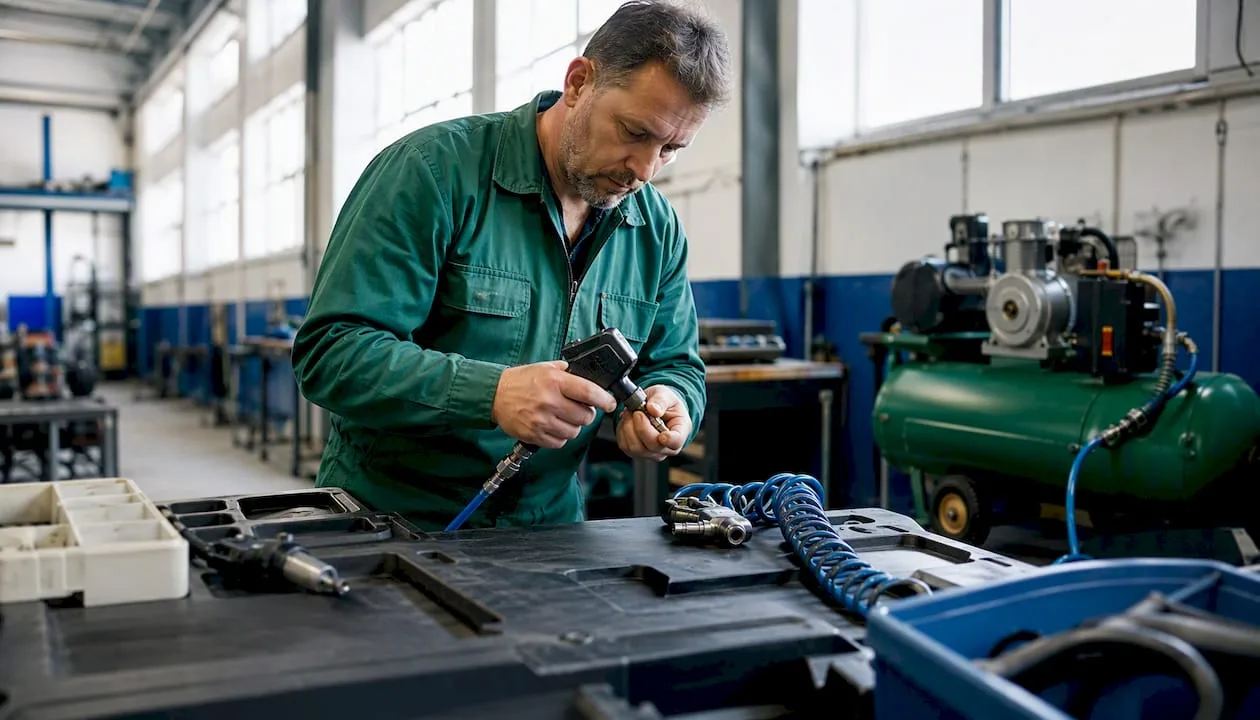
An air compressor can handle a surprising number of tasks in a home workshop: airbrushing and model painting, spraying furniture or a fence, inflating tyres and mattresses, blowing and cleaning parts, working with a nail gun or pneumatic screwdriver, a home beer tap, and even making ice cream. For most of these projects, an oil-free piston compressor with a flow rate of 100–250 l/min, a working pressure of 6–8 bar, and an air tank of 24–50 l is sufficient. Inspiration for home projects with a compressor is therefore wide-ranging, but each project has different requirements, and it is precisely these requirements that determine the choice of machine.
- Airbrushing / model painting: 20–50 l/min, 1.5–3 bar, air tank 6–24 l
- Spraying furniture or a fence (HVLP gun): 100–200 l/min, 2–4 bar, air tank 24–50 l
- Inflating tyres and mattresses: 30–80 l/min, 6–8 bar, air tank 6–24 l
- Blowing and cleaning parts: 50–150 l/min, 4–6 bar, air tank 24 l
- Nail gun / pneumatic screwdriver: 100–200 l/min, 6–8 bar, air tank 24–50 l
- Home beer tap: integrated compressor, operating pressure in the system
- Home ice cream maker with compressor: built-in unit, no external air supply
- Light automotive repair work (pneumatic impact wrench): 200–300 l/min, 6–8 bar, air tank 50 l+
If you are unsure about your choice, always base it on the highest consumption of the tool in the setup, add a 20–30% flow reserve, and choose an air tank that will cover at least 30 seconds of continuous draw without the motor starting.
Key takeaways
An air compressor with a flow rate of 100–250 l/min, a pressure of 6–8 bar, and an air tank of 24–50 l will cover most common hobby projects, from airbrushing to using a nail gun.
| Point | Details |
|---|---|
| Flow rate determines the selection | Always base your calculation on the highest tool consumption and add a 20–30% flow rate reserve. |
| Duty cycle is a critical parameter | Portable compressors with a 50% duty cycle will overheat under continuous draw; for spraying larger areas, choose higher capacity. |
| Air receiver safety | Never use modified tanks without inspection; a safety valve is mandatory for every assembly. |
| Accessories are not optional | A condensate separator, regulator, and filter are essential for quality results and tool protection. |
| Kompresory-vzduchotechnika | Offers oil-free and oil-lubricated compressors, accessories, and service with technical advice for selection according to the project. |
Contents
- What types of compressors are suitable for a home workshop?
- How to choose a compressor according to a specific project?
- Specific home projects with a compressor: instructions and safety
- What accessories do you need for safe work with a compressor?
- How to take care of a compressor and work with it safely?
- When to buy a factory-made compressor and when to opt for a DIY solution?
- The most common mistake made by DIYers: underestimating the duty cycle
- Kompresory-vzduchotechnika will help you with selection and service
- Useful resources and further reading
- Frequently asked questions
What types of compressors are suitable for a home workshop?
The choice of the right type of compressor depends on the frequency of use, the required flow rate, and the type of project.
Oil-free piston compressors are the most common choice for hobby DIYers. They do not require oil changes, the air is cleaner, and therefore they are suitable for airbrushing, food applications (home beer dispensers) and inflating. For intermittent work in the workshop, however, this is usually not an issue.
Oil-lubricated piston compressors have a longer service life and better tolerate frequent or longer working cycles. They are suitable for regular work with pneumatic tools, grinding or spraying larger surfaces. They require regular oil changes and a condensate separator so that oil does not enter the air distribution system.
For home hobby use they are usually oversized and more costly, but for a well-equipped workshop with higher air consumption they make sense. A more detailed comparison of parameters is offered by the guide to choosing an air compressor.
Portable compressors and small desktop units are suitable for work outside the workshop: inflating in the garden, airbrushing en plein air, or cleaning furniture before varnishing. Mobility comes at the expense of air tank capacity.
A special category is integrated compressors in home beer dispensing equipment and ice cream makers. These are not intended for connecting pneumatic tools; they function as closed systems for a specific appliance.
For hobby use, small oil-free units with a flow rate of 100–250 l/min and an air tank of 24–50 l are sufficient for common applications.
How to choose a compressor for a specific project?
The correct selection process is straightforward if you go through it step by step.
- Define the tool or project. Every pneumatic tool has the required flow rate (l/min or CFM) and working pressure (bar or PSI) stated on the label or in the manual. Start here.
- Verify the working pressure. The compressor must reach a pressure at least 1–2 bar higher than the operating pressure of the tool, so that the regulator has room to regulate.
- Calculate the required flow rate. If you plan to use multiple tools at the same time, add up their flow rates. Add a 20–30% reserve.
- Choose the air tank volume and duty cycle. A larger air tank means longer work without the motor switching on. Tools with intermittent draw (nail gun) can manage with a smaller tank; continuous draw (grinder, spray gun) requires a larger one.
Approximate parameters for common hobby projects:
| Tool / project | Flow rate (l/min) | Working pressure (bar) | Recommended air tank (l) |
|---|---|---|---|
| Airbrush | 20–50 | 1,5–3 | 6–24 |
| HVLP spray gun | 100–200 | 2–4 | 24–50 |
| Tyre inflation | 30–80 | 6–8 | 6–24 |
| Blow gun | 50–150 | 4–6 | 24 |
| Nail gun | 100–200 | 6–8 | 24–50 |
| Pneumatic screwdriver | 150–200 | 6–8 | 24–50 |
| Impact wrench | 200–300 | 6–8 | 50+ |
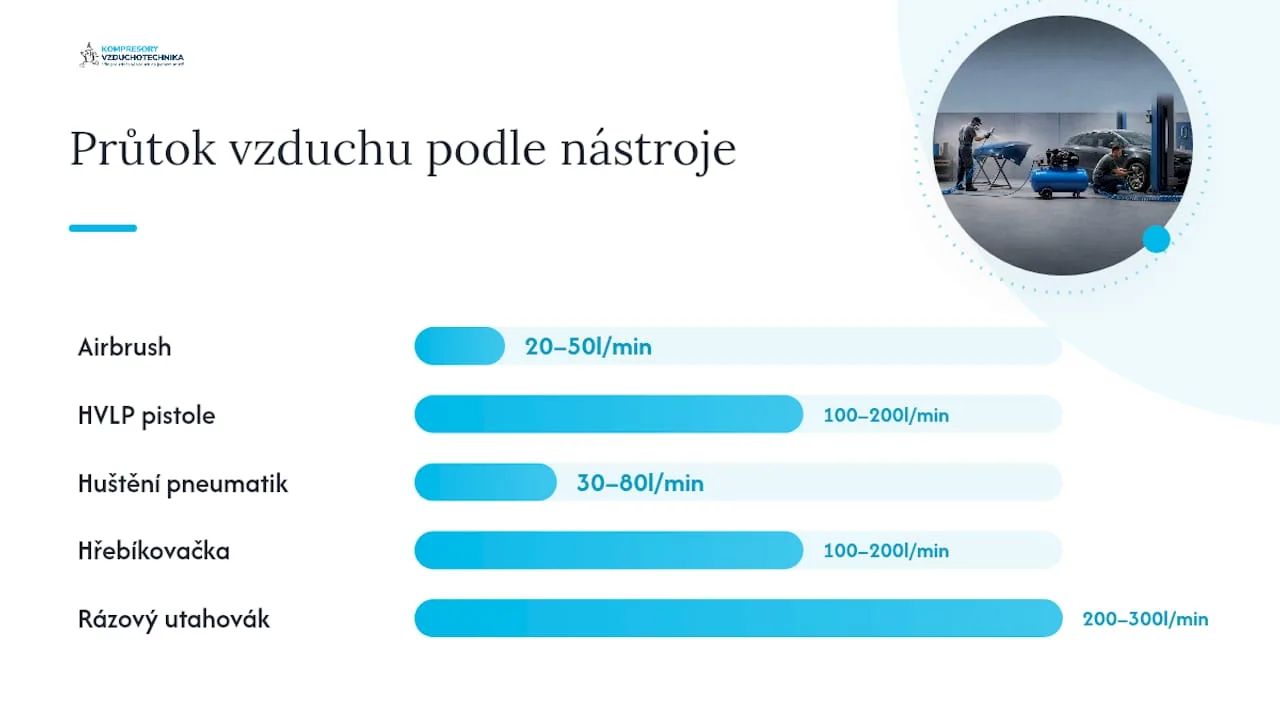
For airbrush work and inflating, a small oil-free compressor up to 50 l/min is sufficient. Once you add an impact wrench or HVLP gun, it's time to move to an oil-lubricated or larger oil-free unit with an air tank of at least 50 l. More detailed technical factors for selecting a larger unit are described in the guide to choosing an industrial compressor.
Specific home projects with a compressor: instructions and safety
Ideas for home projects with a compressor vary in requirements and risk. Each card below states what you actually need.
Airbrush and model painting
Parameters: 20–50 l/min, 1.5–3 bar, air tank 6–24 l. Accessories: fine moisture filter, regulator with pressure gauge, 6 mm hose. Time and costs: purchase price of an airbrush set from approx. CZK 1,500, compressor from CZK 3,000. Work in a ventilated room or with a respirator, paints contain solvents.

Spraying furniture or a fence (HVLP gun)
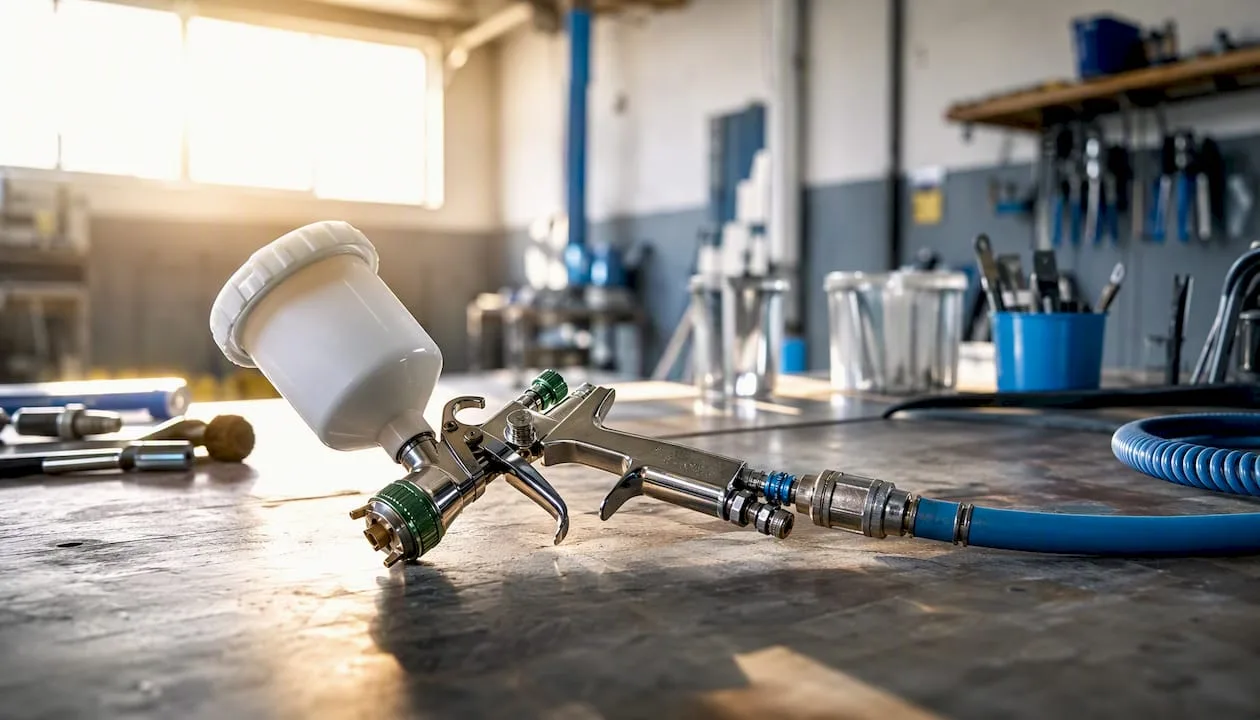
Parameters: 100–200 l/min, 2–4 bar, air tank 24–50 l. Accessories: condensate separator, regulator, HVLP gun, 8–10 mm hose. Always filter out moisture before spraying, otherwise the paint will curdle. Work outdoors or in a well-ventilated workshop, away from open flame.
Inflating tires and mattresses
Parameters: 30–80 l/min, 6–8 bar, air tank 6–24 l. Accessories: pressure gauge, inflation gun with adapters. Never exceed the maximum tire pressure stated on the sidewall. Check the pressure when cold, not after driving.
Blowing off and cleaning parts
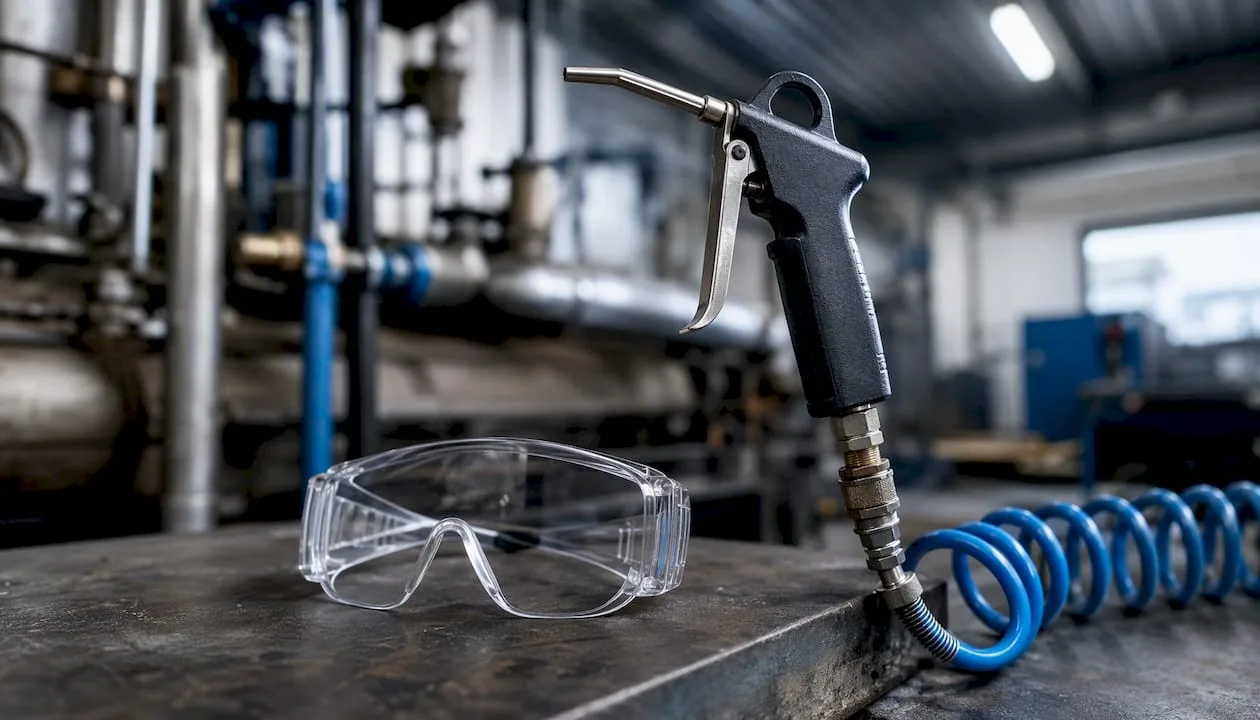
Parameters: 50–150 l/min, 4–6 bar, air tank 24 l. Accessories: blow gun, safety glasses. Never aim the air stream at your skin or into your ears. Use hearing protection, the noise from blowing exceeds 85 dB.
Working with a nail gun or pneumatic screwdriver
Parameters: 100–200 l/min, 6–8 bar, air tank 24–50 l. Accessories: quick couplings, 8 mm hose, safety glasses. Always depressurize the system before disconnecting the hose. A nail gun will fire a nail even with an unintentional press, so never aim it at people.
Home beer tap system
Home draft beer systems with an integrated compressor keep beer under optimal pressure and extend freshness for several days with proper sanitation. The compressor here functions as both the primary pressure source and a backup source for gas systems. Models such as the Pygmy series combine a tap, cooling, and compressor in one unit, allowing dispensing without an external CO₂ supply. Safety: clean the lines and tap regularly, otherwise bacteria will multiply. Use only components certified for food contact.
Professional tip: To prevent beer from foaming during dispensing, set the system pressure exactly according to the keg manufacturer's recommendations, usually 0.5–1 bar, and keep the beer temperature below 5 °C. Higher temperature or pressure will cause excessive foaming.
Home ice cream maker with a compressor
Ice cream makers with a built-in compressor prepare ice cream within an hour and can handle portions of up to one and a half liters without pre-freezing the bowl. This is a closed system that requires no external air supply. Safety: do not place the appliance in an enclosed space without ventilation, as the compressor generates heat.
Light automotive repair work
Parameters: 200–300 l/min, 6–8 bar, air tank 50 l+. Accessories: impact wrench, pneumatic grinder, 10 mm hose, quick couplings, safety glasses, and hearing protection. This is the most demanding hobby application. A small portable compressor is not sufficient here; you need a stationary oil-lubricated or larger oil-free unit.
When working with pneumatic tools in the workshop, always check the tightness of connections before starting up. A leak of pressurized air can cause injury and unnecessarily strains the compressor.
What accessories do you need for safe work with a compressor?
The right accessories determine both the quality of the result and safety. A basic setup for a home workshop includes:
- Inlet air filter: captures dust and impurities at the intake, extending the compressor's service life.
- Condensate separator (moisture separator): separates water from the compressed air, essential before spraying and airbrushing.
- Pressure regulator with pressure gauge: allows you to set the precise working pressure for each tool. Details on proper regulation are described in the guide to pressure regulator applications.
- Safety valve: protects the tank from exceeding the maximum pressure, a mandatory component of every setup.
- Check valve: prevents backflow of air from the tank into the compressor when switched off.
- Hoses: PVC hoses are lightweight and cheap, suitable for airbrushing and inflating. Rubber hoses handle oil and higher temperatures better and are recommended for oil-lubricated compressors and auto repair shops. Diameter 6 mm for airbrushing, 8–10 mm for tools.
- Quick couplers: allow fast tool changes without depressurizing the entire system. Choose a type matching the diameter of the hose and the tool.
- Oil separator: necessary for oil-lubricated compressors used before airbrushing or food-industry applications, so that oil does not get into the product.
- Ear protection and safety glasses: basic personal protection for any work with a compressor.
How to maintain a compressor and work with it safely?
Regular maintenance extends the compressor's lifespan and prevents failures. A compressor and DIY projects go hand in hand, but only when the machine runs reliably.
Daily checks:
- Check the pressure in the tank before starting.
- Visually inspect the hoses and connections for damage.
- After finishing work, drain the condensate from the tank by opening the drain valve. Water in the tank causes corrosion.
Weekly and monthly tasks:
- Check the function of the safety valve by manually testing it.
- Clean or replace the intake air filter.
- For oil-lubricated compressors, check the oil level and its colour. Replace dark or cloudy oil. The bleeding procedure and service tasks are described in the compressor bleeding guide.
Basic safety rules:
- Never exceed the maximum working pressure of the tank stated on the label.
- Do not use modified tanks (for example from fire extinguishers or old refrigerators) without professional inspection and certification. When building a DIY assembly from a refrigerator, installing a safety valve and having the pressure vessel inspected is a condition for safe operation, otherwise there is a risk of bursting.
- Work in a ventilated room, the compressor produces heat and noise.
- Pressure vessels are subject to regular inspection according to applicable regulations. Care of the pressure vessel is described in detail in the guide to maintaining a compressor tank.
Never carry out welding or mechanical modifications to the pressure vessel without professional assessment. A damaged or improperly modified tank can fail without warning.
When to buy a factory-made compressor and when to opt for a DIY solution?
The decision between a factory-made compressor and a DIY build depends on several specific criteria.
- Frequency of use. Airbrushing once a month or occasional inflating can be handled even by a simple DIY setup built from a refrigerator compressor, which delivers approximately 0.7–1 CFM. For regular work with pneumatic tools, a factory-certified unit is safer and more economical in terms of servicing.
- Required flow rate and duty cycle. DIY builds have limited power and duty cycle. Tools with higher air consumption (impact wrench, pneumatic grinder) require a factory compressor with guaranteed parameters.
- Food-grade purity. A home beer tap or ice cream preparation requires air free of oil and contaminants. An oil-free factory compressor or an integrated unit is the only reliable choice here.
- Pressure vessel safety. Homemade tanks from refrigerators or fire extinguishers without inspection are a risk. Factory compressors have certified tanks with safety valves set by the manufacturer.
- Service availability. A factory-made machine can be serviced by the supplier. A DIY build depends on the availability of spare parts and your own knowledge.
An experienced DIYer recommends a combined approach: DIY for low-energy one-off applications, factory-certified units for tools with high air consumption, due to safety, performance, and service availability. In case of any doubts about safety or performance, the correct choice is a factory-made solution and consultation with a specialist.
The most common mistake made by DIYers: underestimating duty cycle
Duty cycle is the parameter most often underestimated by DIYers. If you load it with continuous draw (spraying a large area, grinding), it will overheat and the thermal protection will shut it down, or the motor windings will be damaged.
A practical leak test is simple: pressurize the system, close off the supply, and watch the pressure gauge for 5 minutes. If the pressure drops, look for a leak using soapy water on joints and quick-connect couplings. After each use, drain the condensate from the tank and let the compressor run empty before switching it off. These two measures will significantly extend the machine's service life.
Kompresory-vzduchotechnika will help you with both selection and service
Choosing the right compressor for a specific project isn't always straightforward, especially if you plan to combine multiple tools or expand your workshop gradually. Kompresory-vzduchotechnika offers technical consultation for selecting oil-free and oil-lubricated compressors, supply of accessories (hoses, filters, regulators, quick-connect couplings), and regular servicing including pressure vessel inspections.
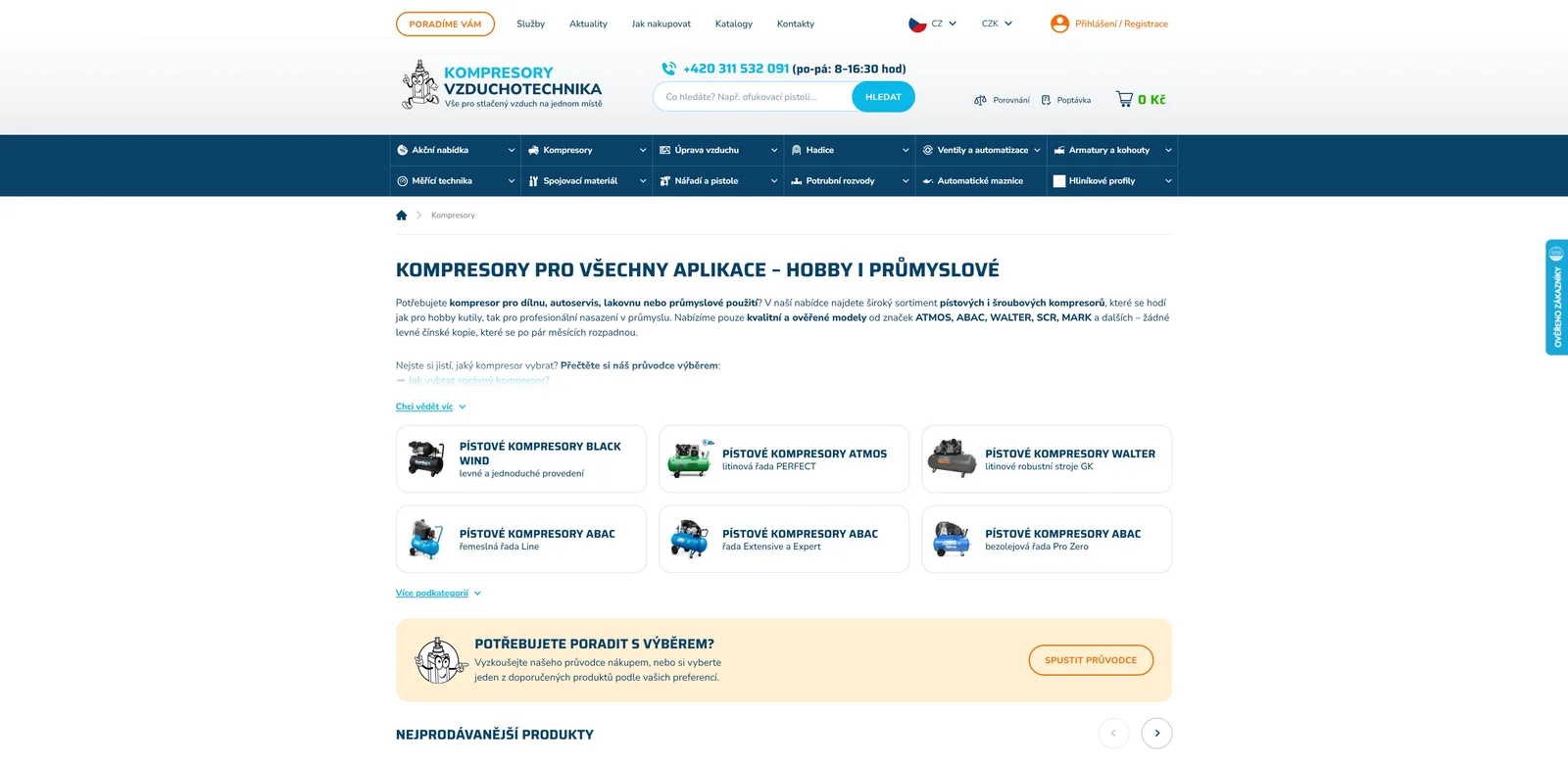
The process is simple: describe your project and the tools you plan to use, and the Kompresory-vzduchotechnika team will propose a suitable setup with specific parameters. The entire range of pneumatics and air technology is available online, with the option of consultation before purchase. If you are not sure whether your existing compressor can handle the planned project, simply send its technical parameters and the service team will assess whether an upgrade is necessary or whether new accessories will suffice.
Useful resources and further reading
- Home use of compressors: options and how to choose the right one — Kompresory-vzduchotechnika
- Examples of compressor use: a guide for workshops and production — Kompresory-vzduchotechnika
- Guide to maintaining a compressor tank — Kompresory-vzduchotechnika
- List of the best compressors 2026: a buying guide — Kompresory-vzduchotechnika
- Basic requirements for a compressor room — Kompresory-vzduchotechnika
Frequently Asked Questions
What compressor is sufficient for airbrushing at home?
For airbrushing, a small oil-free compressor with a flow rate of 20–50 l/min and a working pressure of 1.5–3 bar is sufficient; an air tank of 6–24 l will ensure stable and even pressure without pulsation.
How do I know if a compressor can handle my tool?
How often should condensate be drained from the tank?
Drain condensate after each use by opening the drain valve at the bottom of the tank; water in the tank causes corrosion and shortens the compressor's service life.
Is a DIY compressor made from a fridge compressor safe?
A DIY setup made from a fridge compressor works for low-energy applications, but it requires installing a safety valve and having the pressure vessel professionally inspected; without these precautions, there is a risk of the tank bursting.
Where can I get accessories and advice for a home workshop?
Kompresory-vzduchotechnika offers a complete range of accessories (filters, regulators, hoses, quick couplers) as well as technical advice for choosing the right setup for a specific project.
Recommended
- Home use of compressors: options and how to choose the right one - Kompresory-Vzduchotechnika.cz
- List of small compressors and their benefits for workshop and construction site - Kompresory-Vzduchotechnika.cz
- Examples of compressor use: a guide for the workshop and production - Kompresory-Vzduchotechnika.cz
- Basic requirements for a compressor room: guide 2026 - Kompresory-Vzduchotechnika.cz