

Small horizontal pressure vessels without feet

Small horizontal pressure vessels without feet in five sizes: 5, 10, 15, 24 and 50 litres. All are rated for a working pressure of 11 bar, made of carbon steel with a blue RAL 5015 powder coating on the outside and manufactured to the SPVD Directive 2014/29/EU on simple pressure vessels.
A vessel without feet is a plain, smooth cylinder intended for building into a frame, cabinet or machine. You fix it in place yourself, with clamps or in a cradle. It has the same diameter and length as the horizontal vessel with feet of the same volume. You will find vessels with feet, vertical vessels and larger volumes in our full range of pressure vessels.
Five vessels without feet
The table shows each vessel separately. They differ only in volume; the design, the paint, the 11 bar pressure and the medium are the same for all. You will find the dimensions and connections of each size on the vessel product pages.
| Horizontal pressure vessels without feet, 5 to 50 l | |||||
|---|---|---|---|---|---|
| Vessel or kit | Design | Finish | Working pressure | Medium | Category |
| Horizontal pressure vessel 5 l without feet - 11 bar | horizontal without feet | paint | 11 bar | air | Small vessels up to 50 l |
| Horizontal pressure vessel 10 l without feet - 11 bar | horizontal without feet | paint | 11 bar | air | Small vessels up to 50 l |
| Horizontal pressure vessel 15 l without feet - 11 bar | horizontal without feet | paint | 11 bar | air | Small vessels up to 50 l |
| Horizontal pressure vessel 24 l without feet - 11 bar | horizontal without feet | paint | 11 bar | air | Small vessels up to 50 l |
| Horizontal pressure vessel 50 l without feet - 11 bar | horizontal without feet | paint | 11 bar | air | Small vessels up to 50 l |
#showmore#
When to choose a vessel without feet
When the vessel is to sit in a cradle, hang on a frame or disappear into a cabinet or inside a machine, feet only get in the way. You fix a cylinder without feet in whatever way the assembly needs.
Five and ten litres serve as a buffer volume in a machine’s control air circuit or as a small air reserve for a pneumatic device. The 24 and 50 l vessels are a built-in reserve for machines and assemblies that draw more air at once.
Anyone building their own compressor often reaches for one of these. However, the compressor unit cannot be bolted onto the vessel: the vessels have no brackets for a motor or a piston pump, so the compressor needs its own frame.


Fixing and installation
Choose the clamps according to the vessel diameter given on its product page. A rubber insert belongs between the clamp and the shell so that the vessel does not rattle in the frame and machine vibration does not rub off the paint. Fix the largest, 50-litre vessel securely.
Put the safety valve and the pressure gauge where you can see them well and where nothing will cover them; you need to be able to reach them for inspection.
Fittings, condensate and documents
The vessels are supplied without fittings. For operation they need at least a safety valve set no higher than 11 bar, a pressure gauge and a valve for draining condensate, most conveniently a condensate drain valve. Inside, the vessel is bare steel, and water condenses in it from humid air, so drain it regularly.
Each vessel comes with a declaration of conformity stating its data-plate details and with the instructions for use and maintenance, which also state the minimum permissible thickness of the shell and ends. Whether and how often the vessel is inspected is set by national regulations according to volume and pressure; for the Czech Republic, they are summarised in our article on pressure vessels and the law.
Where next: with feet, the same volumes and pressure
Horizontal and vertical vessels, the pages for the individual volumes, where the vessel without feet is listed next to the version with feet and the stainless steel one, and pages by directive and pressure.
| Related pages | ||
|---|---|---|
| Page | What you will find | Items |
| Horizontal vessels with feet | the same volumes on two feet, and larger ones up to 3000 l | 32 |
| Vertical pressure vessels | from 24 l, take up the least floor space | 89 |
| Pressure vessels 5 l | five litres with feet, without feet and in stainless steel | 3 |
| Pressure vessels 10 l | ten litres with and without feet, a stainless steel one for 12 bar | 3 |
| Pressure vessels 15 l | half as much air again as 10 l, also a stainless steel one for 12 bar | 3 |
| Pressure vessels 24 l | horizontal and vertical, painted, stainless steel and steel with no coating | 6 |
| Pressure vessels 50 l | horizontal and vertical, painted and stainless steel | 5 |
| Vessels to the Simple Pressure Vessels Directive (SPVD) | vertical and horizontal, 5 to 720 l, to Directive 2014/29/EU | 33 |
| Pressure vessels for 11 bar | volumes from 5 to 3000 l, including stainless steel | 50 |
Ventilek’s tip
Mark the bottom connection beforehand. A cylinder without feet can easily turn in its clamps, and the condensate drain valve then ends up on top, where it cannot drain the water.
- How does a vessel without feet differ from one with feet?
- Only in how it is fixed. A vessel with feet stands on two feet with bolt holes; a vessel without feet is a smooth cylinder for building into equipment. Their volume, diameter, length and pressure are the same.
- Which horizontal air receiver without feet should I choose?
- That depends on how much air the equipment draws and how much room there is in the frame. Five or ten litres are enough as a buffer volume, 24 or 50 l as a built-in air reserve for a machine.
- What pressure and temperature are the vessels rated for?
- All are rated for 11 bar and a working temperature of −10 to +100 °C. The safety valve must open at no more than 11 bar.
- Are fittings included with the vessel?
- No, the vessel arrives with a declaration of conformity only. The safety valve, pressure gauge and condensate drain valve are ordered separately.
- Are the vessels without feet also made in stainless steel?
- No, all five are made of carbon steel with RAL 5015 paint. The small stainless steel vessels are horizontal on two saddle feet, or vertical.
Building your own assembly and not sure which size will fit? Send us the dimensions of the space and how much air the equipment draws, and we will advise you.


Product sorting
List of products

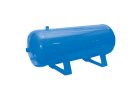
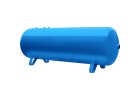
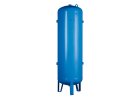
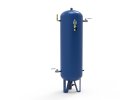
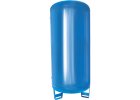
The smallest air receiver for built-in use, a smooth cylinder without feet. You mount it with clamps in a frame, a cabinet or a small pneumatic device.

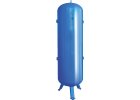
The largest air receiver for built-in use in this category, with two top connections of the same size. It suits a machine frame or assembly that needs a large air reserve...

A 10-litre cylinder without feet for a machine frame or cabinet where feet would get in the way. It has a top connection for a pressure gauge or safety valve and a bottom one...

An air receiver for built-in use where length is limited: it holds 50% more air than the 10-litre version and is less than two centimetres longer. Without feet, it fits into a...

An air receiver without feet, with the volume typical of small compressor tanks. It suits a custom assembly where the vessel is to lie in a frame, or serves as a built-in air...