
The hose range is very wide, and selection must be approached with great care, as many various factors need to be considered. Here you will find a brief guide on how to correctly choose from our range of hoses.
 |
Medium and area of application The primary criterion for hose selection is the medium that will flow inside. Keep in mind that the medium may not be pure and can contain additives that damage the inner structure. A typical example is compressed air, which is non-aggressive on its own, but if not cleaned and containing condensate, it can significantly degrade the hose chemically. |
 |
 |
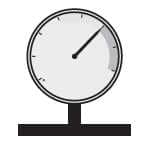
Working pressure Another criterion should be the working pressure. Values are given in various units. Most commonly MPa, atm, and bar, where 1.0 MPa = 10 bar ≈ 10 atm. The working pressure of the medium should never exceed the specified working pressure of the hose. In the case of vacuum, focus exclusively on reinforced spiral hoses to prevent wall collapse. |
 |
 |
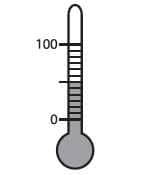
Working temperature Temperature must also be considered. It depends mainly on the medium temperature, but also consider the ambient temperature, which can significantly damage the hose structure. Remember that pressure resistance decreases as temperature rises. If you have high temperature requirements, always request detailed data, e.g., temperature-pressure dependency. |
 |
 |
Hose dimensions Basic dimensions to consider are internal diameter, external diameter, and wall thickness. Think ahead about which fittings and clamps you will need. Sometimes the roll length is also important, especially if the hose needs to be run over longer distances. |
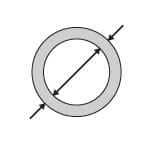 |
 |
Flexibility For hoses in motion or subject to mechanical stress, flexibility is key. An important parameter is the minimum bend radius, which indicates the smallest circle the hose can be coiled into without kinking. Exceeding this limit will cause the hose to collapse, blocking flow and potentially causing significant losses. |
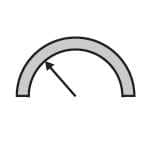 |
 |
Weight In some applications, the total weight plays a big role. A classic case is rubber hoses in construction, which are heavy and difficult to handle. Instead, flat hoses can often be used without problems. |
 |
 |
After carefully considering all these criteria, proceed to select a hose from our range. If you are unsure whether the selected type is optimal, please consult your application with us! |
@KATEGORIE@(/plastove-hadice--puj-pa-ptf-pe/)(12,random)(slider)
Plastic tubing allows for flexible connections, especially for smaller dimensions and lower flow rates. Due to low cost and various material options with different physical and chemical properties, they find use in a wide range of industries including automotive, agriculture, laboratories, and healthcare. Tubes are available in straight, spiral, multiple, and encapsulated versions for special applications.
@KATEGORIE@(/tlakove-hadice-s-opletem--vzduch-olej-plyny/)(12,random)(slider)
| Label | Material Name | Chemical Resistance | Working Temp (°C) | Pressure Resistance | Flexibility | Color Options | Special Features |
|---|---|---|---|---|---|---|---|
| PU | Polyurethane | Low | -20/+60 | Low | Soft 52 °Sh |
Yes | Extreme flexibility Kink resistance |
| PU | Elastollan C-98 | Low | -40/+60 | Low | Soft 52 °Sh |
Yes | Extreme flexibility Kink resistance |
| PU | Elastollan 1198 | Low | -40/+60 | Low | Soft 49-55 °Sh |
Transparent only | Extreme flexibility Kink resistance UV resistance |
| PA6 | Nylon | High | -10/+80 | High | Very hard 85 °Sh |
Yes | - |
| PA11 | Rilsan | High | -40/+80 | High | Hard 63 °Sh |
Yes | - |
| PA12 | MB-Tec | High | -40/+80 | High | Hard 72 °Sh |
Yes | Long lifespan UV resistance |
| PA12 | Extraflex | High | -40/+80 | High | Soft 50 °Sh |
Yes | Flexibility |
| PA12 | Grilamid UL94 V2 | High | -30/+70 | High | Hard 70 °Sh |
Blue | Self-extinguishing UV resistance Hardened rod versions |
| PTFE | Teflon | Extreme | -60/+260 | High | Hard 60 °Sh |
No | Ideal dielectric properties Extreme UV resistance Extreme oxygen resistance Lowest friction coefficient Flame retardant UL94 V0 |
| PVDF | Kynar | Extreme | -40/+100 | High | Very hard 80 °Sh |
No | Aging resistant Extreme UV resistance Non-darkening when heated Abrasion resistance Flame retardant UL94 V0 |
| PFA | - | Extreme | -60/+260 | Medium | Hard 60 °Sh |
No | Extremely clear design Ideal dielectric properties Extreme UV resistance Extreme oxygen resistance Flame retardant UL94 V0 |
| FEP | Fluorinated Ethylene Propylene | Extreme | -60/+200 | Medium | Hard 55 °Sh |
No | Extremely clear design Ideal dielectric properties Extreme UV resistance Extreme oxygen resistance Flame retardant UL94 V0 |
| PE | Polyethylene | Low | -10/+60 | Low | Soft 46 °Sh |
Yes | - |