
Air compressors without a tank, Page 4
-
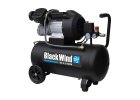
 Black Wind piston compressors
-
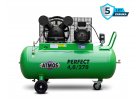
Atmos reciprocating compressors
-
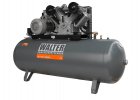
Walter reciprocating compressors
-
Piston compressors ABAC
-
Piston compressors ABAC
-
Expert Zero compressors
-
ABAC reciprocating compressors
-
Quiet compressors Super Silent OS
-
INDUSTRIAL TECH compressors
-
CLR reciprocating compressors
-
Combustion compressors
-
Screw compressors
-
Pressure vessels
-
Compressor accessories
.png)
Product sorting
List of products

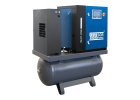
SEC 300 Vario · 30 kW · displacement 4.5 / 4 / 3.3 m³/min · pressure 8 / 10 / 13 bar. 30 kW Vario with frequency inverter — 20–30% savings in operations...

SEC 372 · 37 kW · delivery 6.3 / 5.4 / 4.5 m³/min · pressure 8 / 10 / 13 bar. 37 kW top model of the SEC series — for the largest plants. ATMOS screw...

ST 37 Vario+ FD · 37 kW · delivery 7.3 / 7.1 / 6.4 / 5 m³/min · pressure 7.5 / 8.5 / 10 / 13 bar. Screw block A 150 5th generation (City University)...

The most powerful unit in the range, without a tank, for a compressor room with its own air receiver or a central air network. Four cylinders in two V pairs run at 768 rpm and...

A cast-iron unit for a workshop that already has a working pressure tank and needs a new air supply. The twin-cylinder unit runs at 1,276 rpm and delivers 340 l/min for blowing,...

A unit on a base frame for a workshop without a three-phase supply: it replaces a worn-out compressor on a tank that is still in good working order. The cast-iron twin delivers...

A three-cylinder unit on a base frame for a working tank with a valid inspection whose motor or compressor pump has reached the end of its life. The W layout spreads the...

The unit from the most requested class of the range, without a tank: for a compressor room or your own assembly on a working tank. The large-bore twin runs at 993 rpm and...

A three-cylinder unit for two workstations running at the same time, without a tank: for a compressor room or an existing air receiver with a valid inspection. The W layout at...

The smallest machine of the range on a steel base frame. Fifteen bar in two stages, without a vessel — the air goes straight into the pipework or into a receiver you already own.

The smallest machine of the twenty-bar range on a steel base frame. Twenty bar in two stages, no pressure vessel — the air goes straight into the pipework or into a receiver you...

Eleven kilowatts on a base frame. Against the 7.5 kW machine it adds only nine per cent of air, but runs more easily and is 39 kg heavier.

The strongest machine of the category: fifteen kilowatts and over a thousand litres of air per minute at thirty bar. Twice what the eleven-kilowatt machine gives.

Two point two kilowatts on a base frame. The strongest machine of the range that still starts directly, without a star-delta sequence.

Two point two kilowatts on a base frame. The strongest machine of the range that still starts directly, without star-delta starting.

The smallest machine of the category. The only one that starts directly — from four kilowatts up star-delta is a must.

Four kilowatts on a base frame with star-delta starting. A two-stage airend that delivers over four hundred litres a minute at a full fifteen bar.

Four kilowatts on a base frame with star-delta starting. The first machine of the range where the manufacturer softens the current peak at start-up.

Four kilowatts on a base frame. The first machine of the category where the manufacturer softens the current peak at start-up with star-delta starting.

Five and a half kilowatts on a base frame, with star-delta starting. For plants that have their own certified fifteen-bar vessel.

Five and a half kilowatts on a base frame with star-delta starting. The mid-range machine for plants that have their own twenty-bar pressure vessel.

Five and a half kilowatts on a base frame. Of all the machines in the category it gives back the largest share of the air it draws in — two thirds.

The strongest machine of the range on a base frame. Seven and a half kilowatts, two-stage compression and over seven hundred litres a minute at fifteen bar.

Seven and a half kilowatts on a base frame, star-delta starting, no pressure vessel. Of all the machines in the category it gives back the largest share of the air it draws in.

Seven and a half kilowatts on a base frame. The last machine before output gets expensive — the eleven-kilowatt one adds only nine per cent of air.

A four-kilowatt machine on a base frame with soft motor starting. Almost twice the air of the two-point-two kilowatt machine, in the same mounting. It weighs 92 kg.

A five-and-a-half kilowatt machine on a base frame with soft starting. A sturdier build than the smaller ratings — 101 kg and a longer frame. For a shop with a steady draw from...

The most powerful machine in the range on a base frame, ready to be bolted down. Ninety litres of air more than the five-and-a-half kilowatt machine. The heaviest machine on...

The most powerful machine in the series as a bare unit with motor. Without a frame, for your own installation or integration into an existing assembly. At 102 kilograms, it is...

Oil-free compressor with an output pressure of 10 bar for use as an oil-free air source with TÜV certification according to ISO 8573-1 class 0. Stationary version with a motor...

Oil-free compressor with an output pressure of 10 bar for use as an oil-free air source with TÜV certification according to ISO 8573-1 class 0. Stationary version with a motor...

Two point two kilowatts on a steel base frame with a control box. The strongest machine of the range that still starts directly, without a star-delta sequence.

Four kilowatts on a steel base frame with a control box and star-delta starting. Twice the air of the 2.2 kW machine for seven kilograms more.

Five and a half kilowatts on a steel base frame, with star-delta starting. The largest machine of the range that comes ready mounted on a frame.

The most powerful machine in the series. Supplied as a bare unit with motor, with star-delta starting — for your own installation or integration into an existing setup.

The most powerful machine in the range that fits under a low ceiling — the enclosure is 1,690 mm tall. 21,000 l/min at ten bar, regulation from 6,300.

The lowest enclosure of the large machines — 1,690 mm, 460 mm less than the 132 kW. Into a low compressor room it often fits as the only one. 24,500 l/min.

The smallest pressure penalty in the whole range: eight bar costs only 500 l/min against seven. 24,000 l/min, DN 80 outlet, weight 2,900 kg.

The most expensive pressure tax in the range: ten bar costs 23 % of the air here. It gives 23,000 l/min, but at seven bar that would be 7,000 l/min more.

The first machine in the range to pass thirty cubic metres a minute: 30,000 l/min. It weighs 3,050 kg, stands 2,150 mm tall and needs 25,000 m³/h of ventilation.