
Oil-lubricated air compressors, Page 9
-
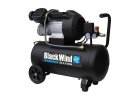
 Black Wind piston compressors
-
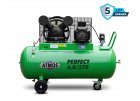
Atmos reciprocating compressors
-
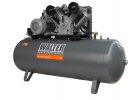
Walter reciprocating compressors
-
Piston compressors ABAC
-
Piston compressors ABAC
-
Expert Zero compressors
-
ABAC reciprocating compressors
-
Quiet compressors Super Silent OS
-
INDUSTRIAL TECH compressors
-
CLR reciprocating compressors
-
Combustion compressors
-
Screw compressors
-
Pressure vessels
-
Compressor accessories

Product sorting
List of products

Five and a half kilowatts on a base frame with star-delta starting. The mid-range machine for plants that have their own twenty-bar pressure vessel.

Five and a half kilowatts on a base frame. Of all the machines in the category it gives back the largest share of the air it draws in — two thirds.

The largest complete assembly of the range: seven and a half kilowatts on a horizontal two-hundred-and-seventy-litre vessel, with star-delta starting.

The strongest machine of the range on a base frame. Seven and a half kilowatts, two-stage compression and over seven hundred litres a minute at fifteen bar.

The largest complete assembly of the category: seven and a half kilowatts on a horizontal two-hundred-and-seventy-litre receiver. The highest delivery you will get here on a...

Seven and a half kilowatts on a base frame, star-delta starting, no pressure vessel. Of all the machines in the category it gives back the largest share of the air it draws in.

Seven and a half kilowatts on a base frame. The last machine before output gets expensive — the eleven-kilowatt one adds only nine per cent of air.

The smallest machine in the range on a steel base frame with a terminal box. Ready to be bolted down or set on anti-vibration mounts, with no further work. It weighs 70 kg.

The smallest machine in the series and the most affordable way to achieve continuous operation. A unit with the motor on a common baseplate, without a frame and without a tank —...

The smallest and shortest machine in the category. A ninety-litre tank fits even where there is no room for a two-hundred-and-seventy. A finished assembly, 93 kg.

A two-point-two kilowatt machine on a steel base frame. The usual choice for a smaller workshop with an air main, where the compressor is to stay put. It weighs 71 kg.

Bare unit with a motor rated at an input of two point two kilowatts. Sixty litres more air than the smallest machine in the range, with the same footprint and only four...

A four-kilowatt machine on a two-hundred-and-seventy-litre tank. Almost twice the air of the smallest machine and a reserve that covers a bursty draw. It weighs 150 kg.

A four-kilowatt machine on a base frame with soft motor starting. Almost twice the air of the two-point-two kilowatt machine, in the same mounting. It weighs 92 kg.

The most powerful machine in the category with soft motor starting. The same tank as the four-kilowatt one, but 174 litres of air more. It weighs 189 kg.

A five-and-a-half kilowatt machine on a base frame with soft starting. A sturdier build than the smaller ratings — 101 kg and a longer frame. For a shop with a steady draw from...

The most powerful machine in the range on a base frame, ready to be bolted down. Ninety litres of air more than the five-and-a-half kilowatt machine. The heaviest machine on...

The most powerful machine in the series as a bare unit with motor. Without a frame, for your own installation or integration into an existing assembly. At 102 kilograms, it is...


Innovative and economical small screw compressor SCR-11/10PM2 for saving up to 50% of electricity. Maximum output 1 500 l/min at 10 bar. Continuous speed control by inverter,...

The most powerful machine in the range that fits under a low ceiling — the enclosure is 1,690 mm tall. 21,000 l/min at ten bar, regulation from 6,300.

The lowest enclosure of the large machines — 1,690 mm, 460 mm less than the 132 kW. Into a low compressor room it often fits as the only one. 24,500 l/min.

The smallest pressure penalty in the whole range: eight bar costs only 500 l/min against seven. 24,000 l/min, DN 80 outlet, weight 2,900 kg.

The most expensive pressure tax in the range: ten bar costs 23 % of the air here. It gives 23,000 l/min, but at seven bar that would be 7,000 l/min more.

The first machine in the range to pass thirty cubic metres a minute: 30,000 l/min. It weighs 3,050 kg, stands 2,150 mm tall and needs 25,000 m³/h of ventilation.

The backbone of a large compressor room — 28,000 l/min at eight bar holds the base demand while smaller machines come in at the peaks. The controller sequences up to sixteen.

The smallest machine in the range at the highest pressure. 2,300 l/min at ten bar, an enclosure of 1,200 × 800 mm and 66 dB(A) — for a workshop where people work alongside it.

The way into the EPM range. Fifteen kilowatts gives 3,000 l/min at seven bar, and the inverter takes it down to 750 — a quarter of its output.

The 15 kW at eight bar, 2,900 l/min. The extra bar costs only 100 l/min here, the smallest difference anywhere in the range.

The most powerful machine in the range at ten bar — 27,000 l/min. It never drops below 7,600 l/min, so it wants steady demand or a substantial receiver.

The top of the EPM2 range — 33,500 l/min, over thirty-three cubic metres of air a minute from a single enclosure. It needs 30,000 m³/h, twice what the 55 kW asks.

The highest delivery the range will give at normal industrial pressure: 31,000 l/min. Same frame as the 132 kW, only 100 kg heavier.

Ten bar from the 18.5 kW: 2,900 l/min, exactly what the 15 kW gives at eight. Same enclosure, same 66 dB(A).

The 18.5 kW in the same enclosure as the 15 kW, but 700 l/min stronger: 3,700 l/min at seven bar, still only 480 kg.

Eight bar and 3,500 l/min in a 1,200 × 800 mm enclosure. Regulation from 1,100 l/min, so the machine serves the workshop even on a single air tool.