

We bring you a general article describing one category of our e-shop – the "gate valves" category. What are they and what do they serve? What are the differences between various gate valves? Read more about this device that helps direct the flow of different types of media.
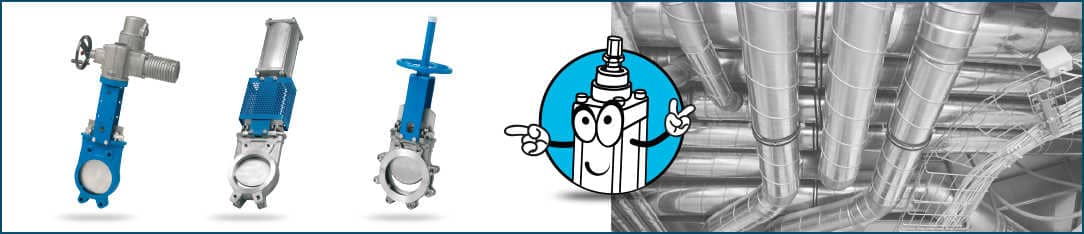
A gate valve is a type of valve used primarily where larger pipe diameters are required. Similarly, a gate valve can be part of various types of shut-offs or regulators.
The internal diagram of a gate valve is not complex. The most important factor is the absolute flatness of the surfaces that "slide" over each other. It mainly consists of one sliding plate and a fixed counterpart – the base plate. Proper seating of these surfaces is ensured either by the pressure of the closed medium, a spring, or simply the weight of the sliding plate itself. The most common solution for moving the plate in distribution and piping technology is screw control. This leads to smooth regulation of the medium flow until complete opening/closing, thus avoiding the risk of water hammer. The screw movement can be manual, electrically driven, or pneumatic.
@KATEGORIE@(/soupatka--ventily--filtry/)(20,random)(slider)
What are the advantages and disadvantages of closing media with a gate valve?
- The advantage in most cases is the low installation space requirement in terms of length.
- The disadvantage is often the height requirement and the subsequent need for access from above.
- For the vast majority of gate valves, the working substance must not contain impurities to avoid damaging the friction surfaces.
What media can be transported with a gate valve?(all gate valves naturally have their specific characteristics)
Testing gate valves after installation |
 |
| The installation of a gate valve is usually not complicated; however, several functional tests must be performed afterward. Do not forget the seat tightness test, leak test, overall strength, and functionality test according to the EN 12266 standard. | |