
|
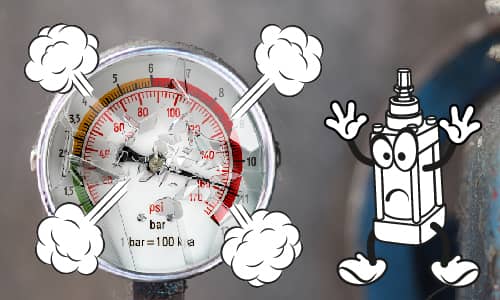
For equipment where there is a risk of exceeding the medium pressure – meaning an overpressure occurs, it is necessary to install a device capable of venting or diverting the excess pressure away from the system. This component is simply called a safety valve. Today, we will look at how to correctly select one, so you can let all possible overpressures slip your mind! |
 |
First of all, let's get acquainted with the types of safety valves offered by today's market and manufacturers – such as our favorite and proven HEROSE. Listing them all would be beyond our capabilities; just imagine, they are used on pressure vessels, boilers, heating systems, heaters, and all systems that need to be protected from exceeding the required, allowable pressure. So, let's start by medium, that will be the easiest…
What media can a safety valve serve?
- refrigerant
- steam
- gas
- bulk materials
- water
- air
As you might guess from other fields, not just compressed air, different media may require different materials to flow through. We want to avoid things like rapid corrosion, but also oxidation and surface degradation, which causes the valve to lose its properties.
@KATEGORIE@(/pojistne-ventily--veskere-provedeni/)(20,random)(slider)
Materials from which safety valves are manufactured:
- brass
- stainless steel
- chrome steel
- high-grade steel
- ductile iron
- bronze
- combinations of the above
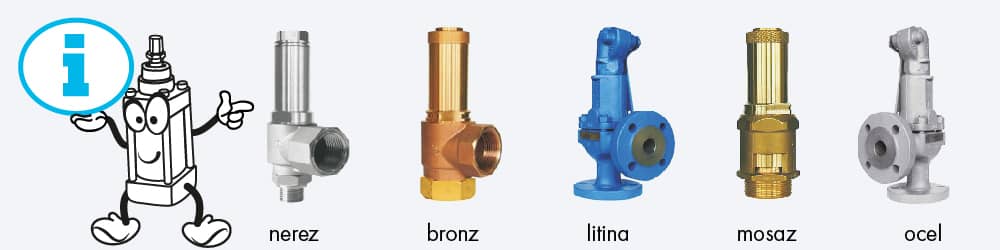
What do these two lists tell us in total? Above all, it is very important to pay attention to the facts in the specifications of individual valves regarding which media they are approved for. Every safety valve should include this information in its description. For example, do you know what inert gases are? You will often encounter them with valves. Inert gases are gases that do not undergo chemical reactions under given conditions – such as nitrogen.
Now let's focus on safety valves from our field – those that serve as safety devices for pressure vessels. In addition to the data mentioned above, focus primarily on these other parameters when choosing:
- connection or thread
- working pressure or setting (range is specified)
- working temperature (range is specified)
additional parameters commonly listed for safety valves: nominal diameter (DN), seal type
Certification and Attestation
Since we are talking about a device involving pressure and its associated hazards, every valve must have TÜV attestation and certification. With us, you always acquire a valve with complete attestation, set and sealed – meaning with the full package of relevant documentation... in short, "full service." The safety valve then only needs to be installed. This is done directly on the pressure vessel or the pressure assembly. When installing, always ensure there is good access to the valve – for subsequent inspections carried out alongside pressure vessel inspections – which we have detailed in this article. Separate valve inspections are not performed, as it would introduce too much unnecessary hassle into operations.
Example of markings for type-approved safety valves:
TÜV SV 94 xxx xx D/G/F 0,xx x
- TÜV – TÜV designation
- SV – safety valve
- 94 – year of type approval
- xxx – type approval number
- xx – smallest flow diameter before the seat in mm
- D/G/F – D = intended for vapors, G = intended for gases, F = intended for liquids
- 0,xx – certified discharge coefficient
- x – set opening overpressure in bars