
We are confident in the quality of our machines, which is why we offer a paid extended warranty of 5 years for all SCR screw compressors, without any limitation on the number of operating hours or shortening of maintenance intervals. Why exten...
SCR compressors - energy savings
How much does electricity cost?
It is generally known that compressors for the production of compressed air in trade and especially in industry are among the machines with the highest electricity consumption ever. The current situation on the energy market, where we are seeing extreme price increases, should prompt every compressor user to consider whether it is worth investing right now in improving the efficiency of compressed air production and purchasing new and more efficient compressors, thus ensuring not only cost savings but also the competitiveness of their company and the elimination of price increases for their products.
Before we look together at how SCR compressors can contribute to solving your worries about the electricity bill, it is necessary to know how much 1 kWh of electricity costs and the annual volume of energy consumption, and to derive what the potential for achieving savings is.
Electricity price development
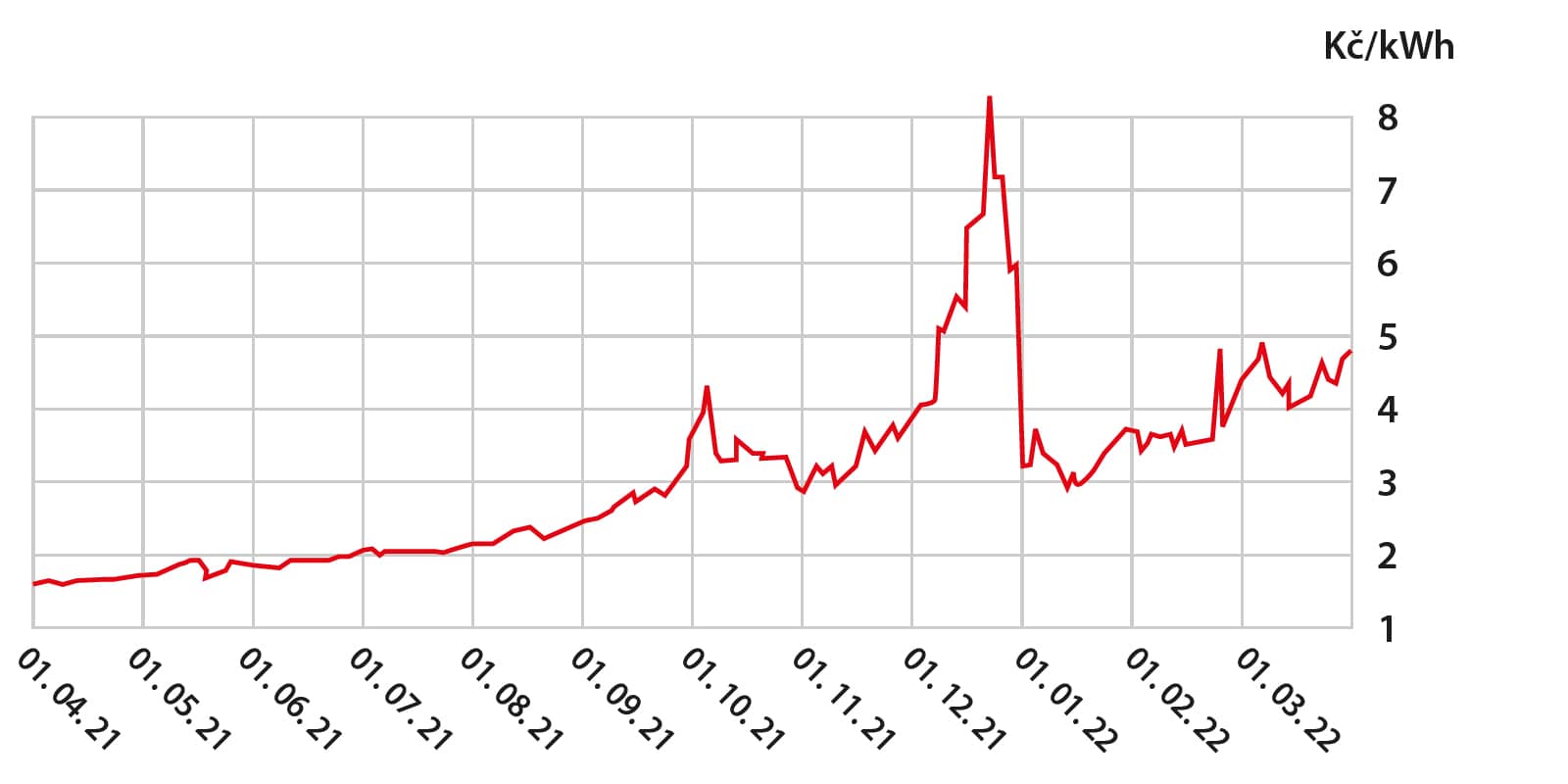
Until 2021, the total price of electricity including transmission in industry was usually around 2.50 CZK/kWh.
Currently, however, the electricity price is already at the level of 5 to 7 CZK/kWh and a further increase is expected in the near future.
Energy comes first
It always pays to think about the future, and this is doubly true if you are considering purchasing a new screw compressor. With a compressor that you will operate for 10 to 20 years, you will have a range of costs associated with it, such as machine acquisition, installation, regular maintenance, or emergency repairs. However, the main cost is the electricity required for its operation.
Based on our experience, electricity costs over a 10-year period account for more than 80% of all costs. This is roughly 14 times more than the purchase price of the compressor. Therefore, before buying, it is definitely worth finding out how efficient the machine you intend to purchase is.
And especially at a time of extreme increases in electricity bills...
 electricity
 compressor price
 installation
 maintenance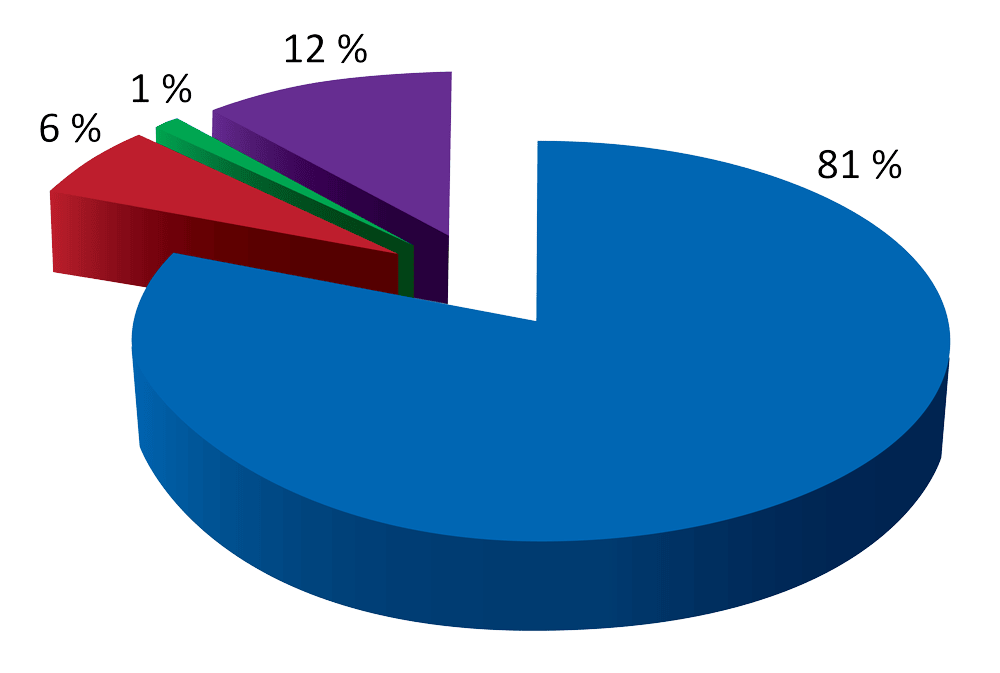
Energy-saving solutions on SCR compressors
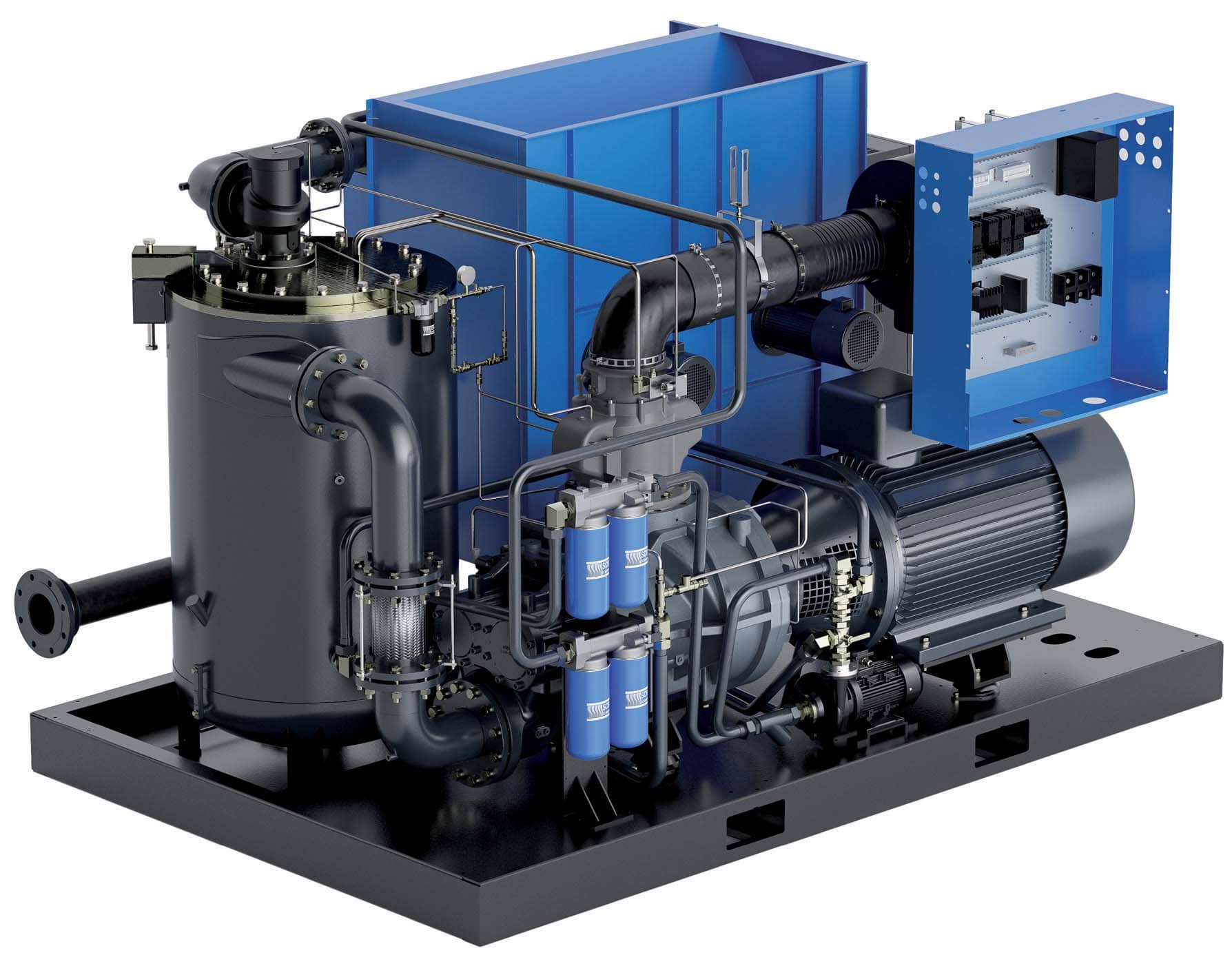
All SCR compressor series were designed specifically with achieving the highest possible energy efficiency in mind, and you will find many innovative and modern features on them that help reduce electricity costs and the production of compressed air in industry and power engineering. Solutions that help reduce compressor operating costs include in particular:
- variable speed control
- 2-stage compression
- lossless direct drive
- IE4 permanent magnet motor
- output pressure adjustment
- energy-saving weekly schedule
- variable speed fan
- low-pressure designs
- oil-free compressors
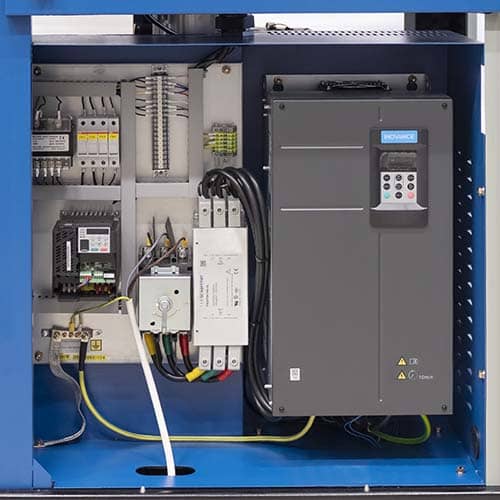
Variable speed control

There are two basic ways of controlling compressor operation on the market:
- fixed speed compressors (FS)
- variable speed compressors (VSD) using a frequency inverter
For fixed speed compressors, two pressure values are set – cut-in and cut-out. If the pressure falls below the cut-out value, the compressor switches on the main motor and starts producing compressed air.
As soon as it reaches the cut-out pressure value, the compressor switches off by first going into idle mode (also known as unloading), where the motor and screw block turn, but the intake valve is closed and the compressor does not produce air. Only after a certain time, in the range of several tens of seconds to several minutes, does the machine shut down completely.


Two-stage compressors

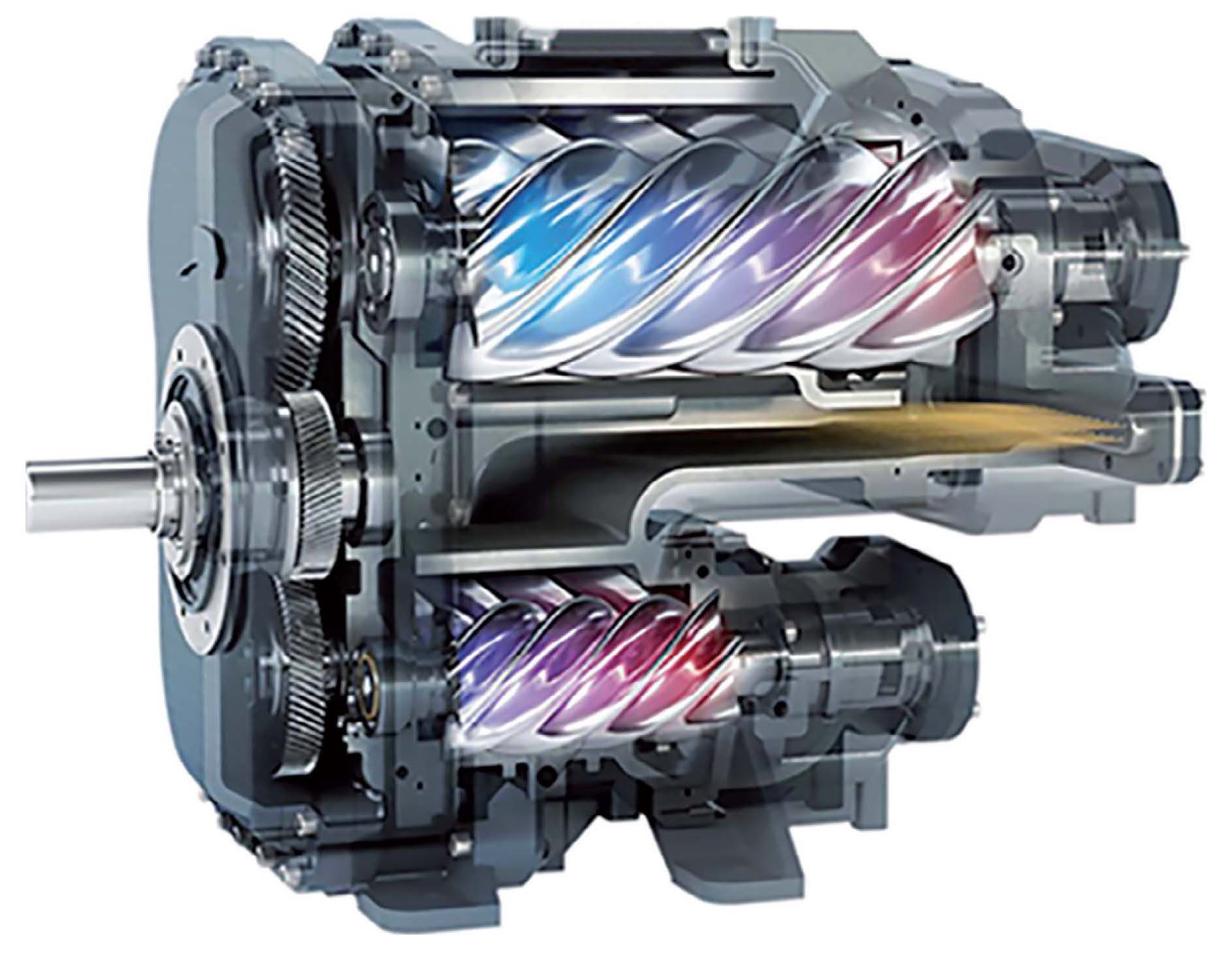
Standard screw compressors use only one screw block for air compression. Compression to the required pressure thus occurs in only one step, a so-called stage. The advantage of single-stage compression is the low price, but from an energy point of view, this method is not economical.
During air compression, a significant part of the supplied energy is converted into heat, and the consequence of this phenomenon is a reduction in efficiency and the production of significantly less air compared to the ideal physical process in the so-called isothermal state, where all supplied energy is used exclusively for gas compression and no heat is generated. For higher compression efficiency, two-stage compressors were developed, which use 2 screw blocks connected to each other by a gearing system.
IE4 permanent magnet electric motor

According to the IEC EN 60034 standard, from 1 January 2017, electric motors used on compressors with power inputs from 0.75 kW must have at least IE3 efficiency; in the case of speed control, IE2 efficiency is sufficient.
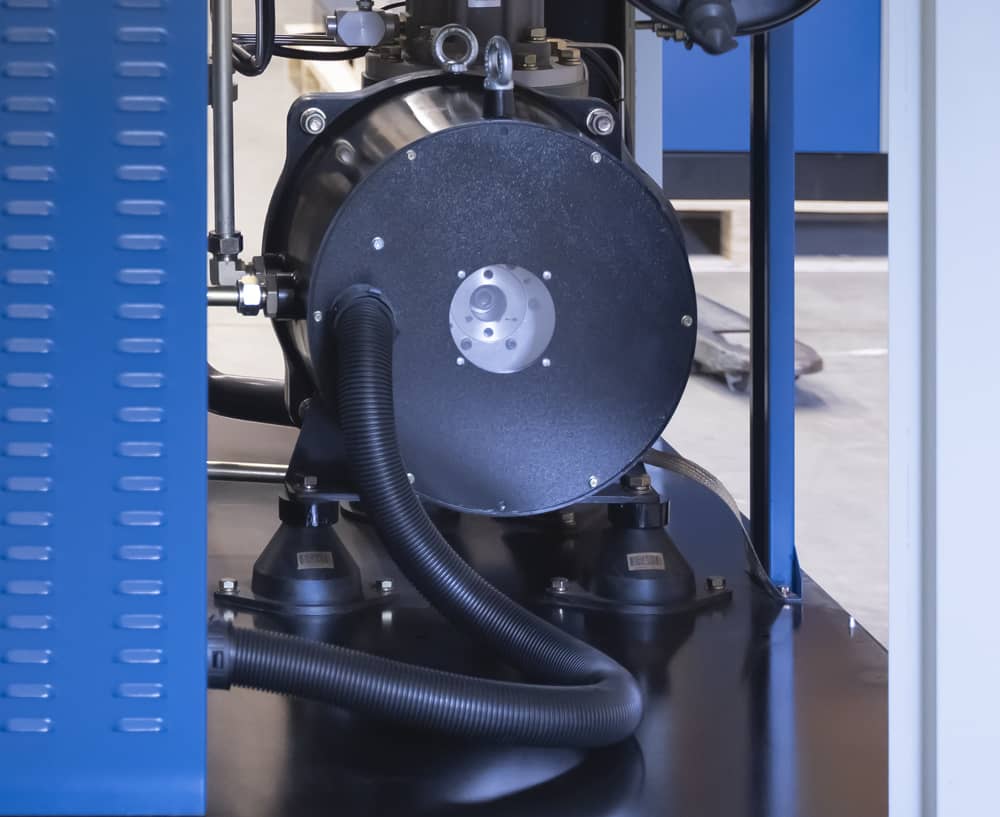
However, modern compressors use electric motors with higher efficiency, and the best-known solution is permanent magnet motors, whose efficiency exceeds IE4 requirements. Differences in efficiency and energy savings achieved between IE3 and IE2 standards and PM-motors on SCR machines can be found in the following table, and compared to IE2 versions, 2-5% of energy can usually be saved.
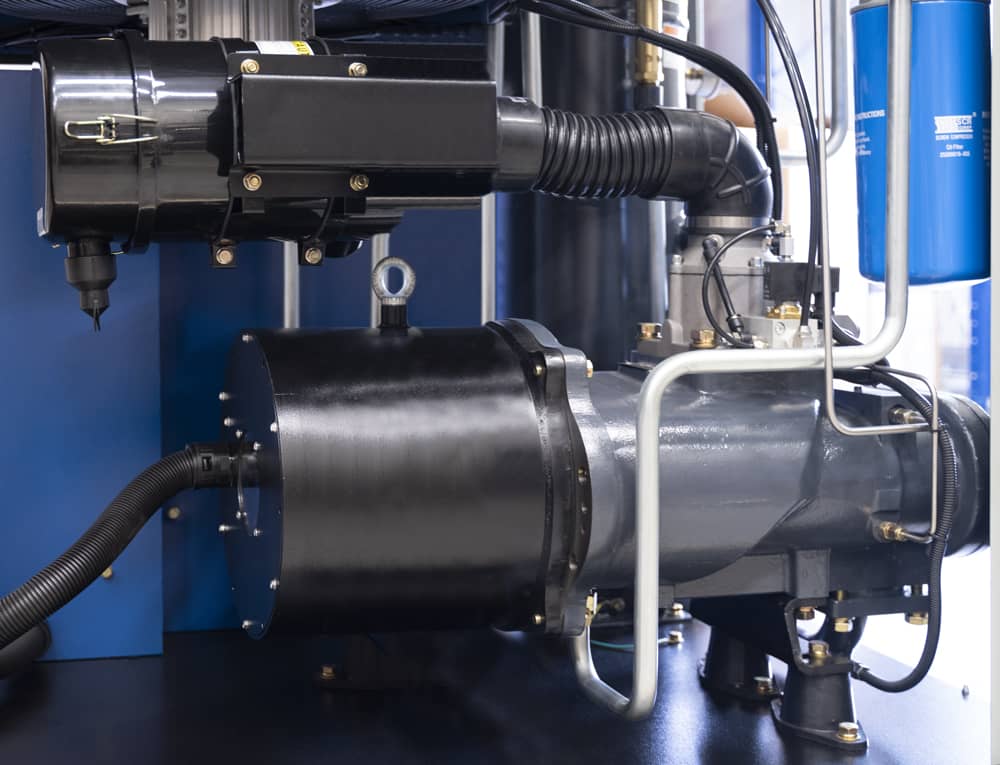
Direct 1:1 drive without losses

The transmission between the screw block and the electric motor in screw compressors is implemented in four ways:
- using V-belts
- elastic coupling
- gearbox
- direct connection, the properties of which depend significantly on whether it is used in conjunction with a conventional electric motor or a bearingless permanent magnet motor.
Flexible pressure setting
Energy is consumed during air compression. The higher the pressure, the more energy the compressor needs to achieve it. Always keep in mind that:
Compressing air by an additional 1 bar means approximately 7% of energy spent!
A well-chosen compressor should therefore have an output pressure slightly above the required level, so as not to consume unnecessary energy for excessive compression, which will subsequently be released. Unfortunately, we often witness situations where the user operates the compressor with a supplied pressure of, for example, 10 bar, and subsequently the pressure is reduced to, say, 6 bar on all input regulators to the machines. Judge the economics of such a solution yourself...
Smart compressor shut-off
A major problem in manufacturing plants is the presence of compressed air leaks, which usually reach around 20%, but significantly higher values can also be encountered. Leaks in the piping system are present all the time, i.e., even when production is not taking place, e.g., on weekends, at night, or during breaks between shifts. It is therefore extremely beneficial to switch off the compressors temporarily during this time so that they do not produce air just to cover leaks in the piping.
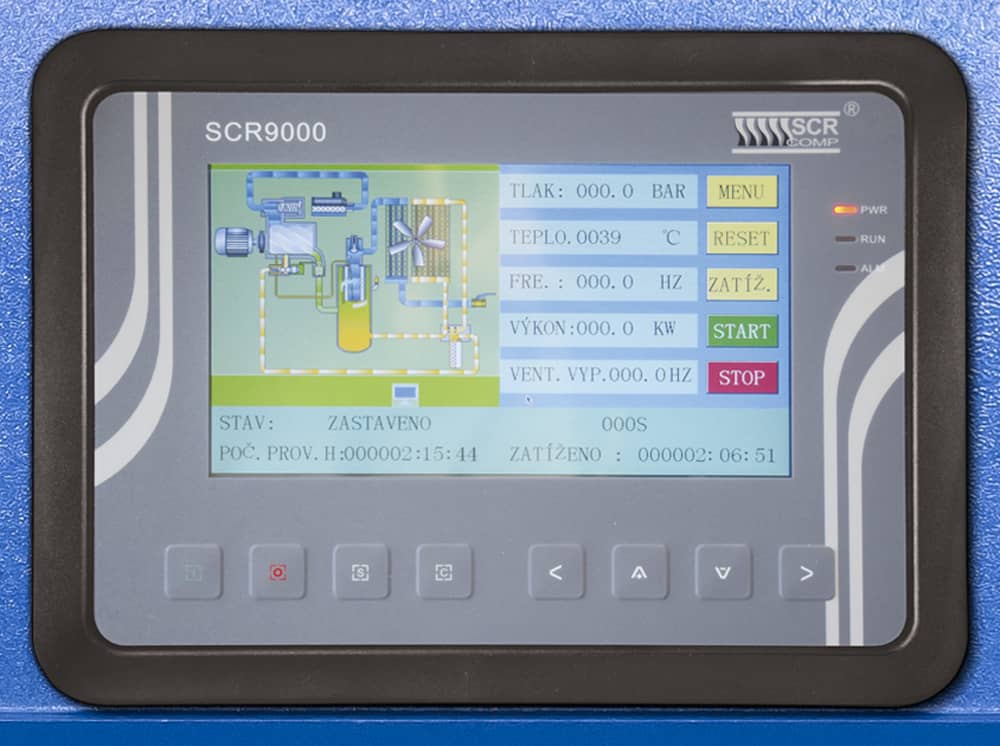
On modern units used on SCR compressors, it is possible to set a weekly compressor operation schedule and set several time periods for each day from Monday to Sunday when the compressor is on and when it is off.
Model example
Manufacturing plant with piping leaks of 20% of air consumption and 2-shift operation with free weekends
free time is 8 h × 5 working days + 48 h on the weekend = 88 hours, which accounts for 52% of the time
switching off the compressor outside shifts will ensure savings of
0.52 × 0.2 = 10.4%
switching off the compressor outside shifts will ensure savings of
0.52 × 0.2 = 10.4%
| Day | Time from | Time to | Status |
|---|---|---|---|
| Mon - Fri | 0:00 | 5:59 | off |
| 6:00 | 21:59 | on | |
| 22:00 | 23:59 | off | |
| Sat - Sun | 0:00 | 23:59 | off |
Low-pressure applications 1.5-5 bar

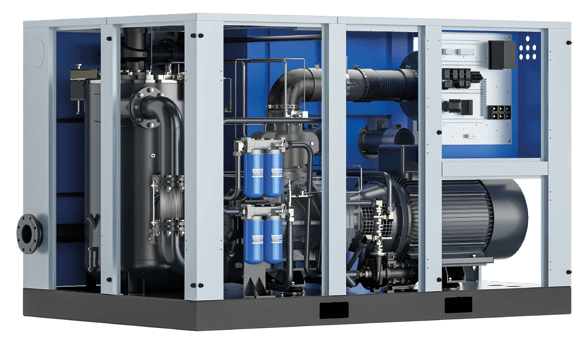
In industry, there are many applications that need lower pressure than the standard 7-10 bar supplied by screw compressors. Such applications occur most frequently in the glass, plastics, textile industries, or cement plants and usually need compressed air pressure of 1.5 to 5 bar.
In these so-called low-pressure applications, it is not enough to produce air using blowers, whose upper pressure performance limit ends at an overpressure of around 1.5 bar, and therefore conventional screw compressors are used, which have an output pressure at the level of around the mentioned 7-10 bar. Compressors with speed control allow reducing the supplied pressure down to the level of 4-5 bar, but they face 2 fundamental problems:
pressure range 4 - 5 bar - conventional compressors are not optimized for 4 - 5 bar pressure and energy efficiency in this range is very poor
pressure range 1.5 - 4 bar - compressors must still produce at least 4 bar pressure, which is subsequently reduced to the required pressure in the 1.5 - 4 bar range
Oil-free compressors

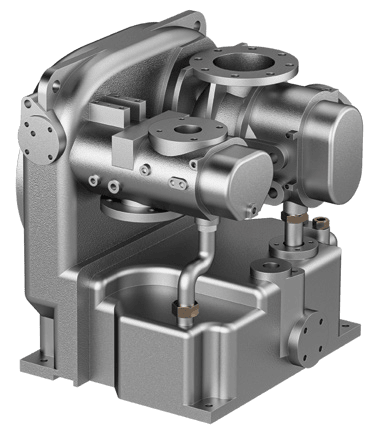
Some critical applications in industry require the supply of oil-free compressed air. These include primarily the beverage industry, food processing, hospital and pharmaceutical sectors, industrial breathable air supplies for blasting, or paint shops. Oil-free compressed air is defined according to ISO 8573-1 Class 0 and its production can be ensured either by a conventional compressor with an appropriate air treatment system or directly using an oil-free compressor.
The use of oil-free compressors is becoming increasingly suitable even outside the mentioned critical applications, especially due to zero risk of air quality reduction due to oil leakage, but mainly also due to significantly lower investment and maintenance costs of the technology.
Main savings of oil-free compressors:
- no need to install filters and activated carbon towers
- no need to install a water-oil separator
- no oil changes
- no changes of oil and separator filter in the compressor
- no need to clean the oil cooler
- maintenance of the thermostatic valve and check valve is eliminated
- particulate filter elements have longer maintenance intervals
- no need to replace separator cartridges
- no need to perform condensate quality tests
- no wastewater legislation issues
- pressure inspections of the oil tank in the compressor are eliminated
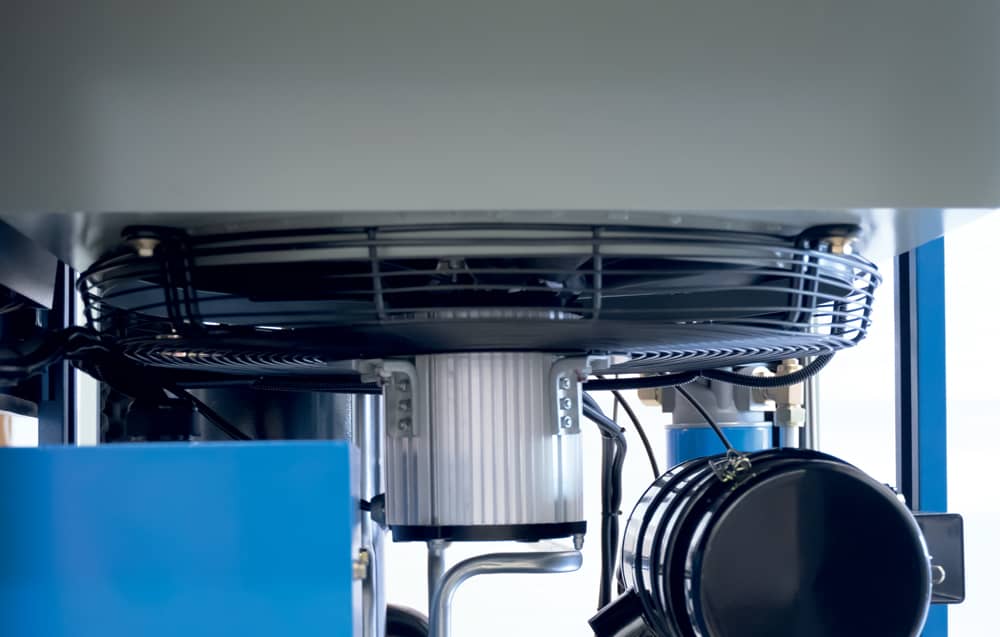
Variable speed fan

Every compressor is equipped with a fan that ensures the extraction of hot air present inside the compressor and provides cooling for the oil and air cooler.
Energy consumption of the fan usually amounts to 2 to 5% of the total compressor power input.
Thanks to the control, the fan motor consumes only the truly required amount of electricity, and compared to the traditional solution where the fan runs completely at full speed without control, there is an extreme reduction in electricity consumption in the order of tens of percent, which means several percent of the total energy consumption of the compressor.

SCR AUDIT - find out how much you will save!
If you need help achieving energy savings and are unsure about choosing the optimal solution, contact our company.
We have extensive experience in designing compressor stations and optimizing energy costs in existing compressor rooms, based on which we have prepared a concept for assessing the current state in the form of the SCR AUDIT.
If you decide to use SCR AUDIT, we will visit your facility and perform as part of the audit:
- a comprehensive assessment of the current state of compressors
- assessment of the air treatment system
- measurement of compressed air consumption
- detection and quantification of air leaks
List of articles

Extended 5-Year Warranty
SCR Screw Compressor Installation
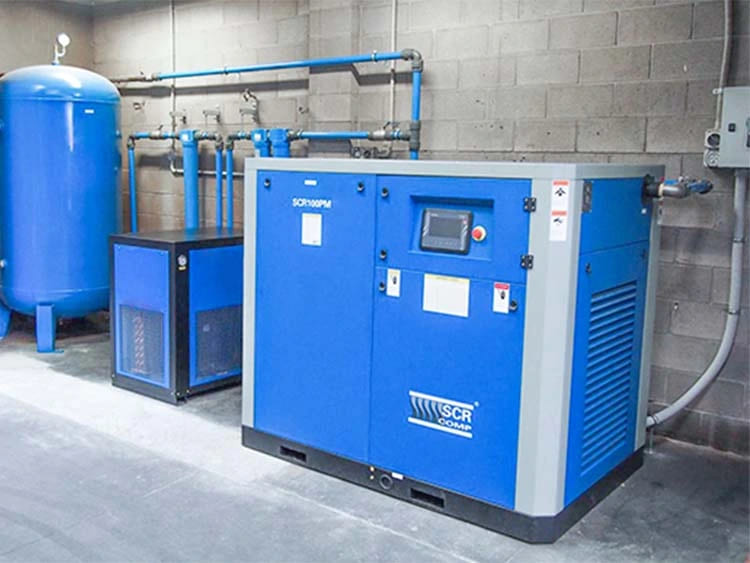
To fulfill the manufacturer's warranty conditions, the installation of SCR compressors must be carried out by the importer or an authorized service organization. The installation price on our website is valid only within the following scope: the m...
SCRent – Lease a Compressor for 5 Years
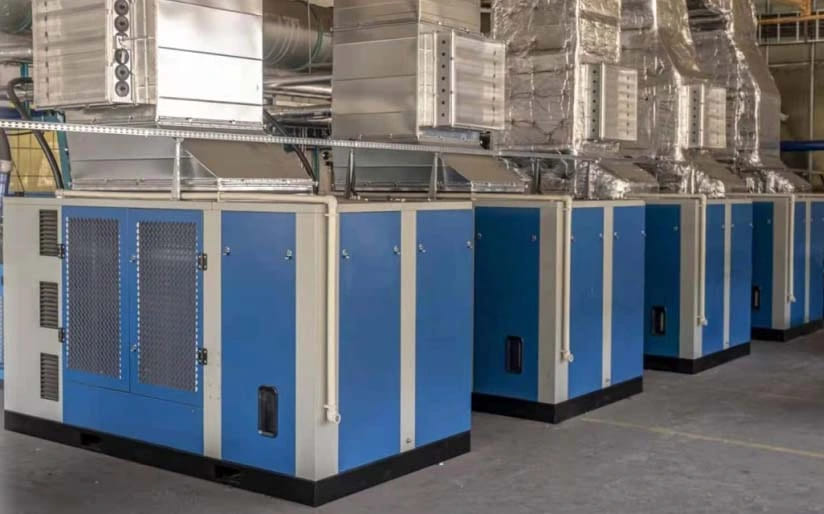
Thanks to our SCRent program, you no longer have to invest large amounts of capital to purchase a new energy-efficient compressor. In cooperation with Raiffeisenbank, we offer a modern method of financing through long-term rental of the machine for 5...
SCR9000 Control Unit
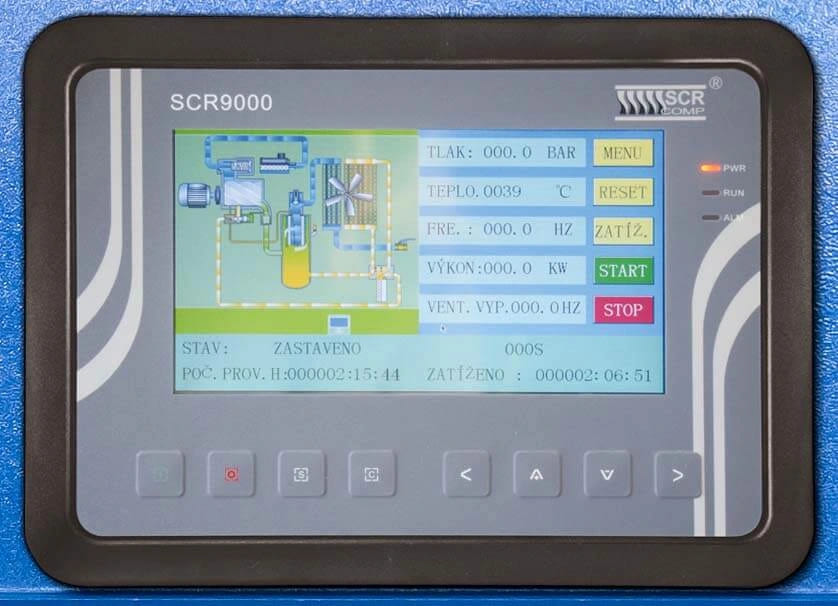
The SCR9000 control unit is a modern system for controlling the operation of screw compressors with a convenient 7" touch color screen and has the following functions and features: dual control option by touching the screen or using buttons d...
Listing controls
4 items total