


- Compressed air filtration prescribed by ISO 8573-1
- NGF Filters
- Professional Industrial Filters
- Accessories for Professional Industrial Filters
- Selecting a MARK Air Filter
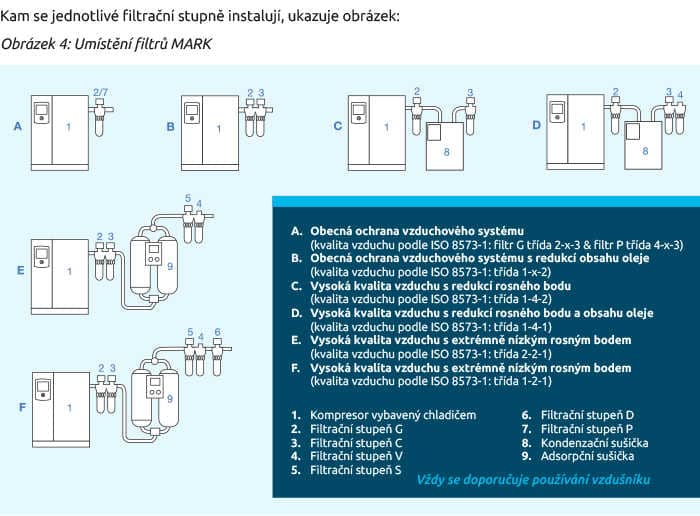
- MARK Filter Types
Compressed air filtration prescribed by ISO 8573-1
Impurities in atmospheric air are a major enemy of compressed air distribution and cause wear and corrosion of all components. The quality requirements for compressed air in different environments are prescribed by the ISO 8573-1 standard. Industrial filters are a useful helper in the fight against impurities in compressed air.
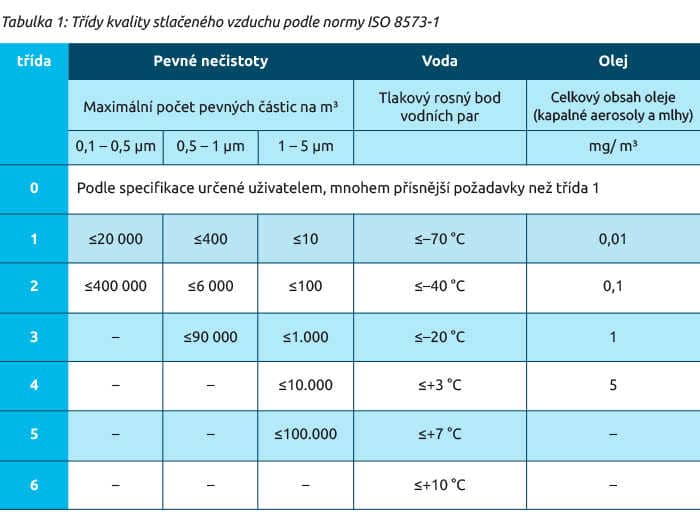
Compressed Air Classes
For various applications, the ISO 8573-1 standard sets quality classes expressed by three digits. For example, for workshop air, the standard mandates 4-4-5 quality. This three-digit number indicates three prescribed quality classes in this order: quality class for solid particles, quality class for water (dew point temperature), and quality class for oil.
Filter Testing Standards
Filter manufacturers state which standards the filters are tested under.
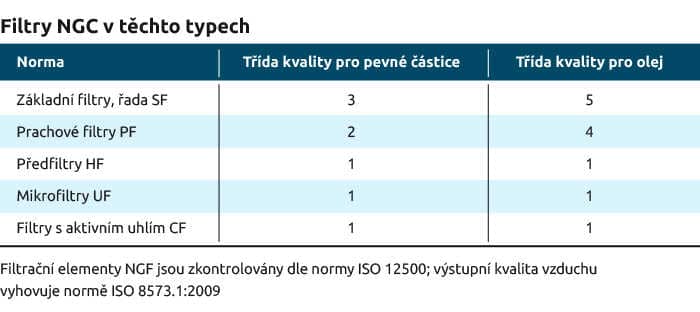
The ISO 12500 standard defines universal testing methods for compressed air filter manufacturers.
- ISO 12500-1 defines testing of coalescing filters for aerosol removal.
- ISO 12500-2 defines oil vapor adsorption for adsorption filters.
- ISO 12500-3 defines particle size during particle filtration.
NGF Filters
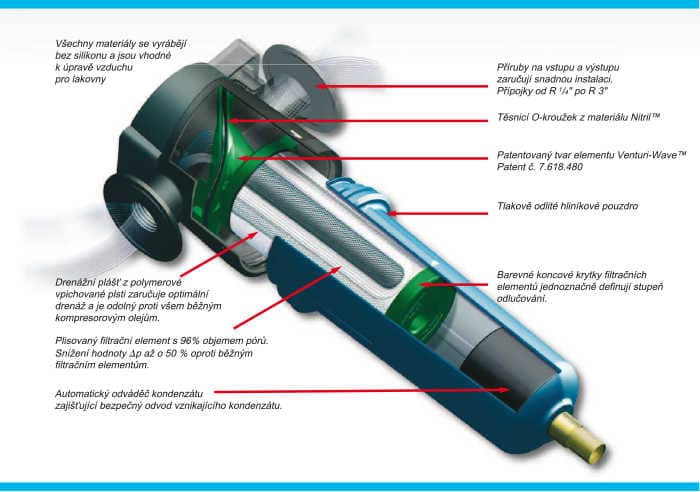
The NGF filter series ensures perfect compressed air quality at low operating costs. These filters are designed for the following operating conditions:
- Max. working pressure: 16/11 bar
- Volume flow rate: 34 – 2,549 m3/h (567 – 424,833 l/min)
- Inlet temperature max. 66 °C
Professional Industrial Filters
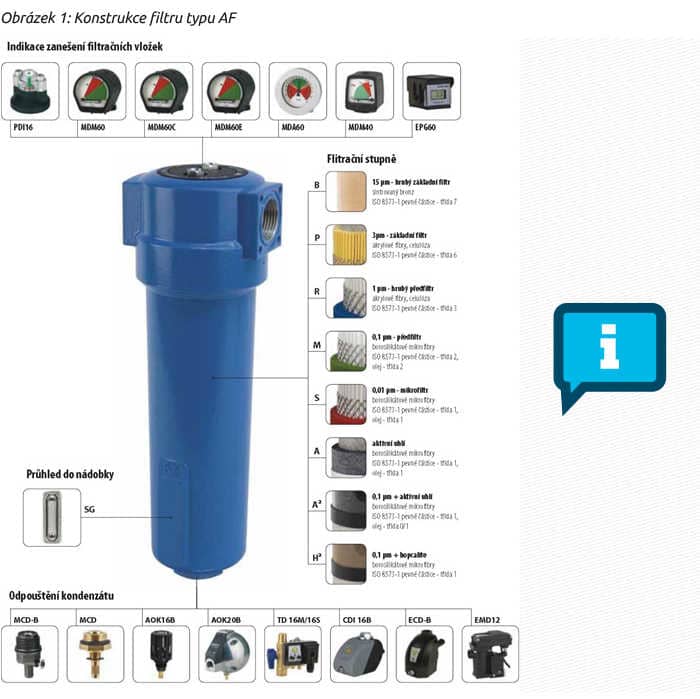
Figure 1 shows the construction of an AF type filter and guides us on how to choose a suitable filter:
- Choose the filter body based on system pressure, volume flow, and resistance requirements.
- Select the appropriate filtration grade according to the required air quality.
Filter Element Replacement Rule
- Once a year or upon reaching a pressure drop of 350 mbar; every 6 months for grade A.
- Choose a clogging indicator type to signal when the filter element needs replacement.
- Select a suitable drain for condensate removal.
Filter Body Selection
Consider these parameters when choosing a filter body:
- Maximum working pressure and temperature
- Volume flow rate
- Filter material according to the working environment (aluminum, nickel-plated steel, or stainless steel)
- Compressed air system connection (threaded or flanged)
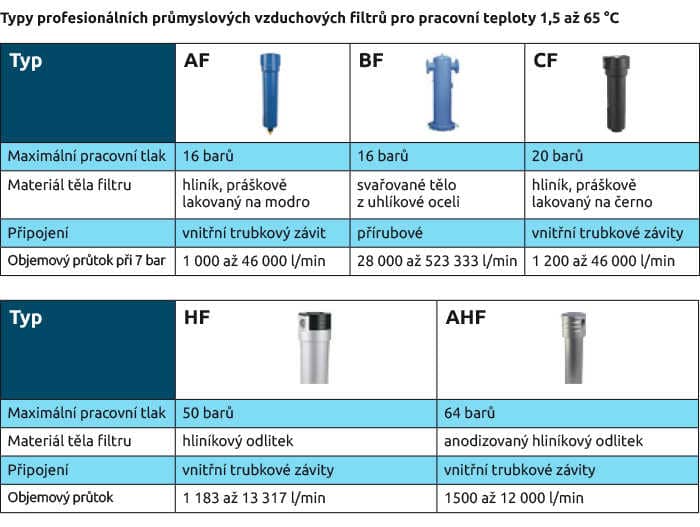
Filters for Special UseSpecial filters are designed for demanding environments like chemical, food, pharmaceutical industries, or hospitals. They can withstand temperatures up to 150 °C and some are sterilizable. |
 |
SPF Stainless Steel Sterile Filters for temperatures up to 150 °C
Filters undergo an integrity test (DOP) to confirm they are leak-free. The filter complies with US FDA directives for food contact CFR title 21.
Accessories for Professional Industrial Filters
Filter Element Clogging Indicators
|
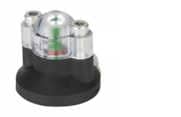 |
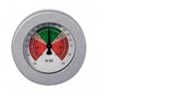
The indicator hand moves into the red field when the element needs replacement. |
 |
Condensate Drains
- MCD Manual Drain: Hand-operated valve.
- Float Drain: Automatic drain controlled by a float.
- Electronic Automatic Drains: Level-sensing drains that prevent air loss.
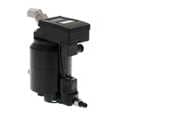
LG Drain
|
 |
MARK Industrial Filters
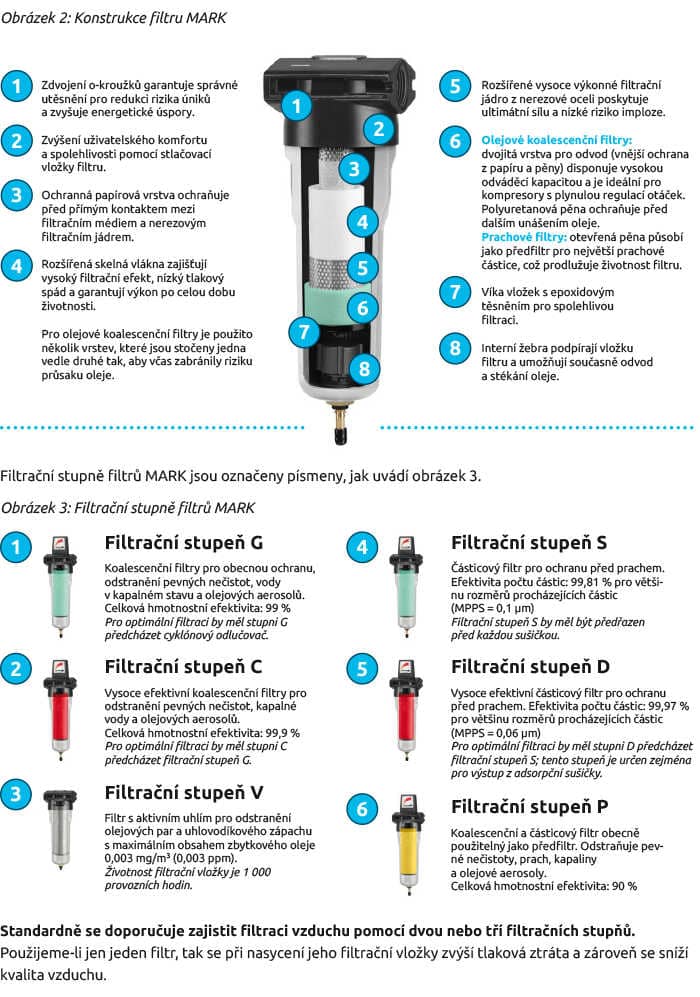
Mark industrial filters offer numerous design advantages suitable for both industrial and workshop use. They are rated for a working pressure of 16 bar.
Selecting a MARK Air Filter
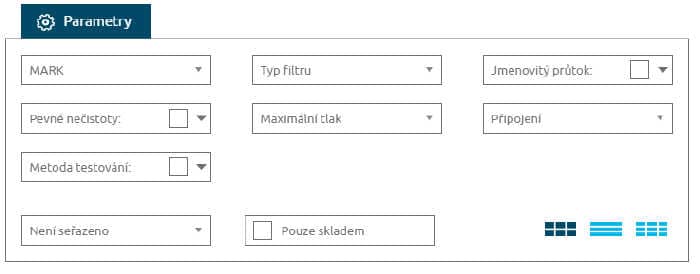
On our portal, you can use a search table to simplify selection based on filter type, air quality class, maximum pressure, and connection size.
MARK Filter Types
Particle Filters (FS/FD Series): Protect against dust with up to 99.97% efficiency.
Coalescing Filters (FG/FC Series): Remove water, oil, and aerosols with up to 99.9% efficiency.
Active Carbon Filters (V Series): Remove oil vapors and hydrocarbon odors.
Pre-filters (FP Series): Capture large impurities to protect downstream equipment like dryers.
