

 |
How much compressed air leaks cost us?
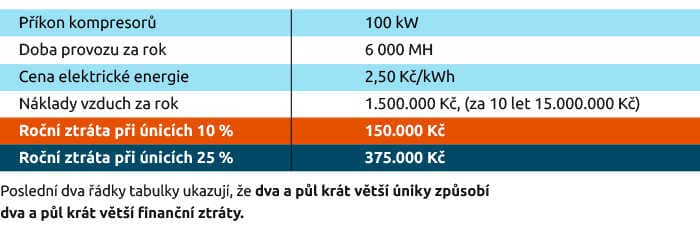
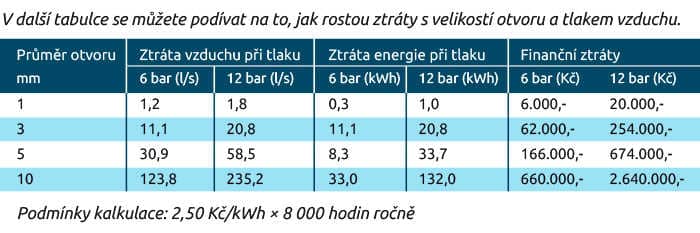
Escaping compressed air also means escaping significant financial resources. The air sucked into compressors is free, but the electricity to power them is not. In manufacturing plants, 10 to 25% of compressed air leaks away without any benefit. We will demonstrate how much the electricity for this unnecessarily produced compressed air costs using the example of air production with a 100 kW compressor:


Eliminating leaks in three steps
- Determine how much air is leaking from the system.
- Find the locations where air is escaping.
- Repair the leak points – by replacing seals, the entire coupling, or the appliance.
Determining how much air is leaking
The amount of air leaked without benefit can be measured in one of the following ways:
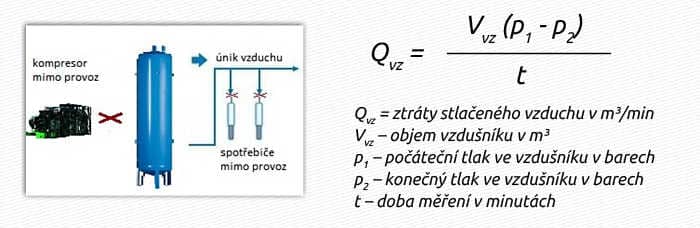
Monitoring pressure drop in the air receiver
The approximate volume of leaks in m³/min can be found from the pressure drop in an air receiver that receives no air from the compressor and has all appliances disconnected so that no air is consumed.
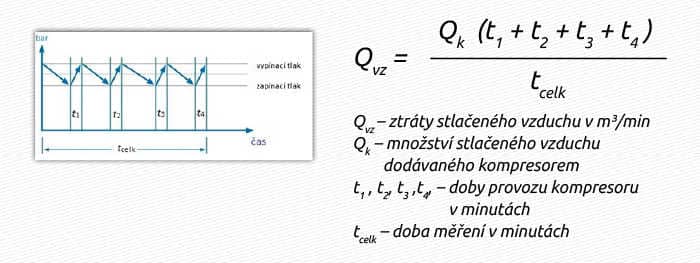
Monitoring compressor duty cycles with appliances disconnected
This method can only be used for fixed-speed compressors. Turn off all appliances so that compressed air is consumed only due to leaks. The system pressure will drop, and the compressor will turn on to replenish the leaked volume, then turn off again. This cycle repeats. A useful result is achieved only if several compressor switching cycles occur during the measurement period.
Measuring compressed air flow
Leaks can also be determined by measuring the compressed air flow before the appliance and comparing it with how much air the compressor delivers. Read more about flow measurement here:
https://www.kompresory-vzduchotechnika.cz/poradna/mereni-prutoku-stlaceneho-vzduchu
Which areas are most prone to leaks
If you find that a large amount of air is being lost due to leaks, search for where the air is escaping. Most air leaks occur at the end of the system, where the air is consumed. Therefore, focus your search primarily on the end of the distribution lines.
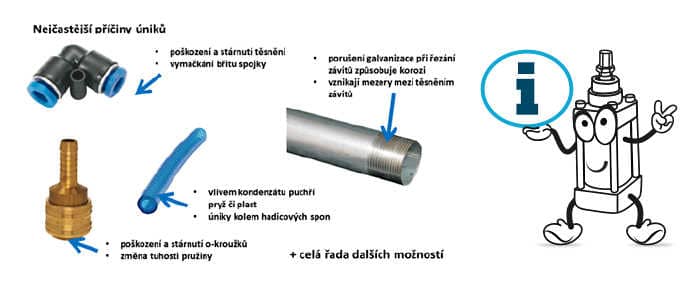
Focus on these locations when searching for leaks
- Leaking quick-couplings and fittings (shut-off valves)
- Leaking connecting hoses to compressed air appliances
- Use of outdated condensate drains (float drains, timer-controlled solenoid valves)
- Outdated compressed air appliances (e.g., exceeding compressed air pressure at tool inlet)
- "Weathered" joints and disintegrated seals of pneumatic control elements
- Cracks in welds
- Under-tightened or loose fittings and flange joints
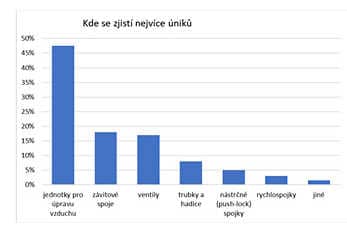
Leaks are easiest to detect in the immediate vicinity of the operator. They will notice air escaping and alert maintenance. The American company Ingersoll Rand recorded leak data in various operations and identified the places where most leaks are found. As shown in the graph, the most leaks are detected:
In these three locations, an average of more than 80% of leaks in industrial plants are identified. |
 |
Preventing compressed air leaks
- Do not compress air to an excessively high pressure
- Do not use outdated appliances
- Regularly inspect the compressed air distribution system
- Measure how much air is being lost in the system
- Search for compressed air leak locations
- Detect leaks by listening or with an ultrasonic detector
Searching for leak locations
|
 |
|
|
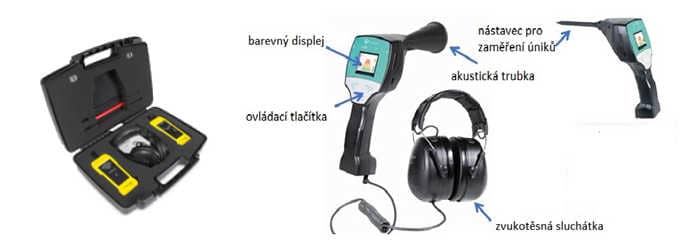
Searching for leaks with a leak detector in three steps:
- Attach the acoustic tube to the device and connect the headphones. Put the headphones on and walk through the operation. If you hear a sound in the headphones, move in the direction where the sound gets stronger. This approximately locates the leak.
- Attach an extension or laser transmitter to the detector and pinpoint exactly where the air is escaping.
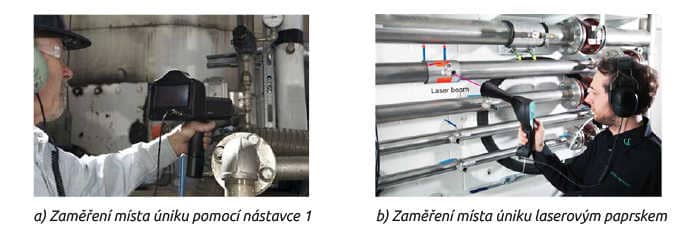
3. Apply soapy water or a special solution to the leak site. Bubbles will confirm that air is indeed escaping at this point.
4. Mark the leak location with a tag or take a photo for the report, which then serves as a guide for eliminating individual faults.
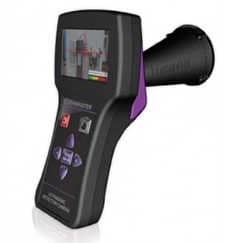
Searching for leaks with an ultrasonic detection cameraYou can also use an ultrasonic detection camera to search for leaks. This shows the leak location on a color display at a distance of up to 20 meters. Leaks are color-coded by severity. An image of the location can be transferred in JPG format to a computer, including additional information such as date and time of measurement, image number, and measured RMS and MAX decibel (dB) values. |
 |
Purchase a leak detector or have leaks identified by specialized firms
Regular leak checks certainly pay off. In larger compressed air systems, it is advisable to have your own ultrasonic detector always at hand. If you feel that purchasing a detector is not worthwhile for you, you can order leak detection as a service.